
I bought my first bottle of Farnam Endure expecting two weeks of peace. I got about six days on Nadia and closer to nine on Sahir, and I want to tell you that up front because the label says 14 and my bay mare disagrees.
That is not a knock on the product. It is the single most useful thing I can tell you before you spend money on it. Endure is a genuinely good fly spray, and it is also the most misunderstood one on the shelf, because the number on the front of the bottle is a lab figure and you are standing in a dusty paddock in August.
The Quick Verdict
A real step up from ordinary fly sprays for horses that sweat, with one honest caveat: on thin-skinned, sensitive mares you will be reapplying well before the label's 14 days are up.
Amazon Check Today's Price →See what Endure costs today, and whether the 32 oz bottle covers your herd
A 32 fluid ounce bottle goes a long way on three horses if you spray onto a brush first instead of misting into the air.
Amazon Check Today's Price on Amazon →How I Actually Tested It
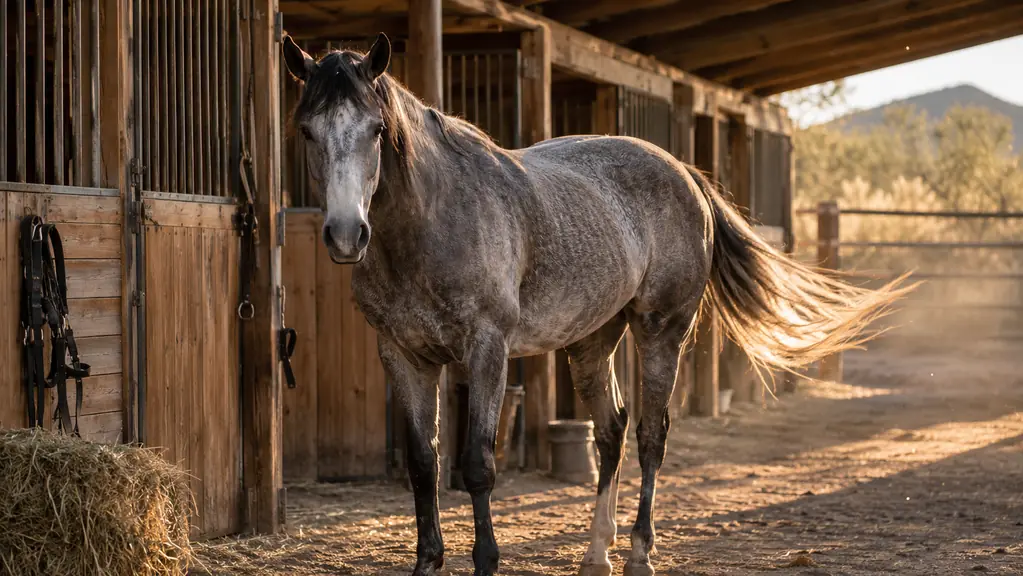
I run a 12-acre place outside Scottsdale with a four-stall shed-row barn, a wash rack, two dry-lot paddocks and one irrigated pasture. Three Arabians: Sahir, a 14-year-old gray gelding who is my main riding horse; Nadia, a 9-year-old bay mare with thin skin and a low tolerance for anything harsh; and Kasim, a 22-year-old chestnut gelding who is retired and mostly stands in the shade being annoyed.
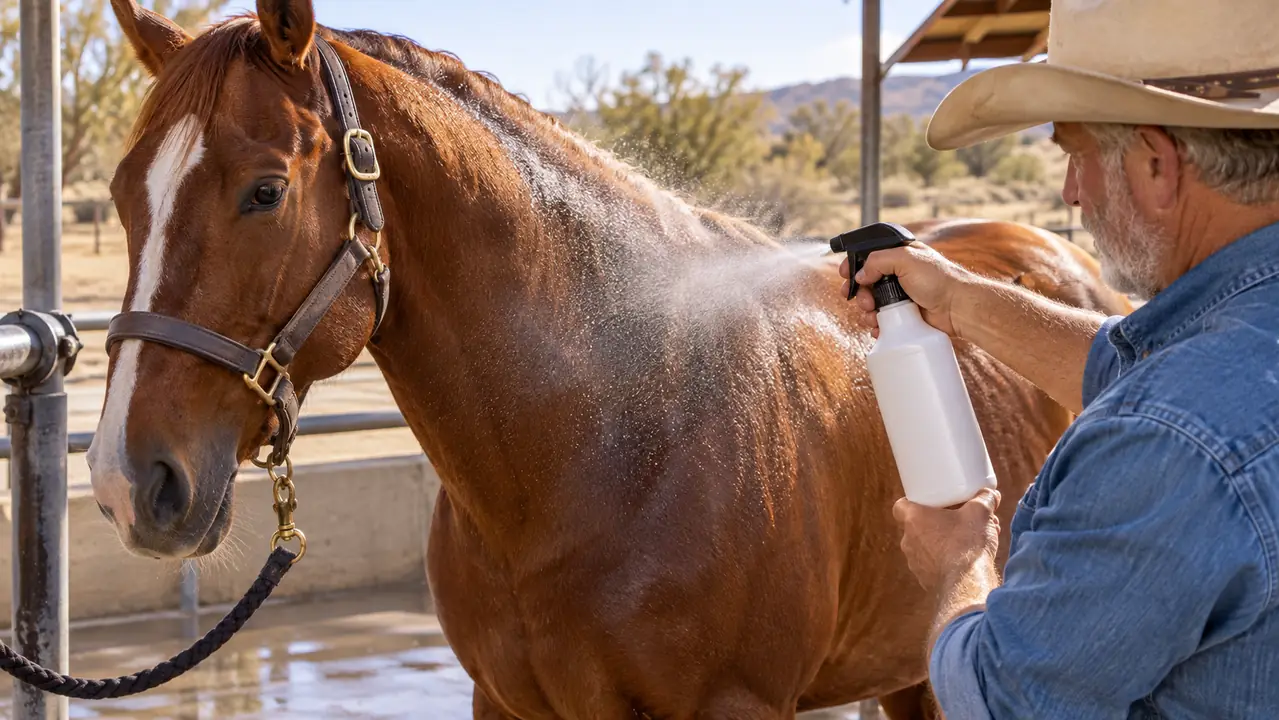
I used Farnam Endure through a full desert fly season, which here runs long. Stable flies come up off the pasture, face flies work the eyes, and the horn flies are on the belly before you have finished your coffee. I applied it three ways across the summer: full-body misting, spray-on-a-brush for the face and ears, and a light wipe along the belly and legs before rides.
Before this bottle I was running a two-part system: a wipe for the face and a general barn spray for the body. It worked fine in June and fell apart in July. The wipe lasted about an hour on a sweating horse and the barn spray was gone by the time I turned them back out at dusk. I was going through a bottle a week and still watching Nadia stomp in the cross-ties. That is the baseline I am comparing against, and it matters, because better than what I had is a low bar and Endure clears it by more than a step. I also tried the trick of spraying a bandana and tying it to the halter. That lasted most of a morning, but it collected dust, and after a monsoon blow the bandana was filthy by the second day and I was not going to press that against a horse's cheek. So the brush method became the one I stuck with, and it has stayed the one I use.
I kept it simple. Same bottle, same horses, same time of morning, and I wrote down on a stall chart when the head-tossing started again. That is the only way I know to get an honest read on a spray, because by August everything feels like it is working until you look at the horse's tail.
What the 14-Day Claim Really Means
Endure is built on permethrin, and Farnam's own listing describes Repelock technology that binds to the hair shaft to support sweat-resistant coverage. That binding is the whole idea. Ordinary sprays sit on the hair and wash or sweat off; this one is designed to hang on. It also lists up to 14 days of long-acting protection compared with ordinary fly sprays.
Here is the caveat nobody puts in the product description. Fourteen days is a controlled figure. In a real barn you are currying dust out of a coat, hosing a horse after a ride, and watching a mare sweat through a July afternoon. Every one of those wears at the coverage, and no spray survives all of it at full strength.
What I found is that the protection is front-loaded and it fades. Days one through four, the flies are genuinely put off. Days five through eight, it is still working but the face flies start testing the edges. Past day nine on Nadia, she is back to stomping. That fade is normal and it is not a reason to skip the product. It is a reason to buy it knowing you will top up.
I kept the chart on a clipboard hooked to the stall door, which sounds fussy until you try to remember what last Tuesday actually felt like. Nadia's entries read like a countdown. Day one, no stomping, quiet on the cross-ties. Day three, still quiet, one tail swish at turnout. Day five, face flies at the corners of the eyes, so she got a top-up. Day six, stomping at the feeder before I had finished filling water. Sahir ran longer. Day four, nothing to report. Day seven, a fly or two working the belly, no head tossing. Day nine, head tossing at turnout and a tail that would not quit. Kasim fell in between, closer to Sahir, which surprised me until I remembered that he stands in deep shade most of the afternoon and shade is exactly where the flies hold. Those are numbers from my barn and not a lab, and they are the numbers I plan around now. Keep the same kind of notes for two weeks and you will know your own horses better than any label can tell you.
The label says 14 days. My thin-skinned mare says six. The truth is that Endure holds longer than anything else I have used, and still not as long as the bottle promises.
Where It Genuinely Earns Its Place
The sweat resistance is not marketing filler. I rode Sahir through a morning that hit 98 degrees by ten, and he came back wet through the neck and shoulder. Usually that is where a fly spray quits. With Endure, the flies were still off him on the walk back to the barn, and the difference between that and a cheap spray is obvious the moment you see it.
The ride that settled it for me came in early August. We went out at six to beat the heat and still came back into a hundred and one degrees, Sahir wet from the throat down to the girth. On the old spray, a ride like that was a fly convention. A horse comes back from a sweat like that and the flies find every damp inch of him. This time he walked the last quarter mile with his ears forward and his tail still, and that is not a thing I am used to seeing in August. I hosed him off at the wash rack and the coverage held through the rinse, which I did not expect. Not perfectly, and not to the same degree it went on, but he was not instantly covered again the moment the water hit him. That is a real difference, and it is the reason I stopped shopping for a cheaper bottle halfway through the season.
The spectrum matters in the desert too. Farnam lists it for house, stable, face and horn flies, and those are the four I fight. One bottle instead of a barn fly spray plus a face wipe plus a leg wipe is worth something, and it is worth more than the per-bottle difference suggests.
I will also say the scent is fine. That sounds like faint praise, but I have used sprays that made me cough through a wash-rack session, and Endure does not. It goes on, it dries, and it stays out of the way.
What Nobody Tells You Before You Buy
The 32 fluid ounce bottle is smaller than it looks in a photo. It measures roughly 2.8 by 4.7 by 11.75 inches and weighs about 2.1 pounds, so it is a handheld bottle, not a barn-sized jug. On three horses at full-body application, you will go through it faster than you expect.
The workaround is the one that saved me money: spray onto a brush or a cloth and then apply, especially on the face, ears and legs. You use a fraction of the product, you get better coverage on the spots flies actually target, and you stop fogging the wash rack. Mist it into the air and most of your bottle goes into the dust.
To put a number on it, at full-body rate on three horses I went through the 32 fluid ounce bottle in a little under three weeks that first time, misting into the air. On the brush method, with a light midweek top-up on two of them, the same size bottle carried me closer to five weeks. That is the biggest cost lever in the whole product and it costs nothing to pull. A cheap paint brush from the hardware store works as well as anything, and a soft face brush handles the eyes and ears. Load the brush, work it against the grain, then smooth it back down. The coat ends up damp rather than wet, which in desert heat is what you want anyway. Keep the bottle in the shade while you work, because a hot bottle in a hot barn is miserable to hold and there is no reason to do that to yourself.
The other thing worth knowing is that this is a permethrin product. That is exactly why it lasts, and it is also a reason to read the label rather than guess. Apply it as directed, keep it away from your own face while you spray, and do not layer it on top of another permethrin spray thinking more is better.
The Drawbacks, Stated Plainly
Nadia is my test case for anything harsh, and she is the reason this review is not five stars. Even applied carefully with a brush, she got a bit of a twitch in the shoulder for a few minutes after application. Not a reaction I would call dangerous, and it passed. But a sensitive mare notices, and if your horse is the type to object to a spray bottle before it even gets near them, plan on the brush method from day one.
The cost per ounce is also higher than a basic fly spray, and it is only good value if you actually get the extended coverage out of it. If you are the kind of owner who sprays once in June and hopes, you are paying a premium for protection you are not using.
And the fade. I keep coming back to it because it is the whole honest story of this product. Endure is better than what I used before, and it is not a two-week vacation from fly duty.
What I Liked
- Sweat-resistant coverage that held up on a horse worked hard in desert heat
- Handles stable, house, face and horn flies, so one bottle covers more of the job
- Sprayed onto a brush, a 32 oz bottle stretches much further than misting
- Pleasant scent, no coughing through a wash-rack session
- Noticeably better staying power than ordinary fly sprays on my geldings
Where It Falls Short
- The 14-day figure assumes ideal conditions, and my thin-skinned mare got about six days
- 32 fluid ounce bottle goes fast on three horses at full-body rates
- Higher cost per ounce than basic sprays
- Sensitive horses may twitch briefly at application
- Not a replacement for a daily fly mask in peak season
Who This Is For
If you have horses that sweat, this is the spray to buy. Ridden horses, horses on irrigated pasture, horses in a hot climate, and anyone who has watched a fly spray quit the moment the coat got damp. That is where Farnam Endure pays for itself, and it is the reason I keep a bottle on the shelf.
It also suits a multi-horse barn where you want one product to do several jobs. Covering face flies and stable flies and horn flies with a single bottle is a real simplification, and it saves you money compared with stacking three products that each do one thing.
And it suits the owner who is willing to work the schedule. If you will brush it in and top up every week or so at the face and belly, you get close to the advertised result. If you want a set-and-forget spray, this is not that product and no spray is.
Who Should Skip It
If your horse has reacted badly to permethrin-based products before, skip it. Do not buy a bottle to find out. There are other fly control routes, and a sensitive horse is not a science experiment.
If you have one easy-keeper that stands in a stall most of the day and never breaks a sweat, a simpler fly spray plus a good fly mask will cost you less and do the job. Endure's advantage is sweat resistance and staying power. A horse that does not sweat does not need to pay for either.
And if what is really bothering you is face flies working the corners of the eyes, no spray fixes that on its own. A fly mask with a nose fringe does more for the eyes than any bottle. Endure is a good tool. It is not the whole toolbox.
How I Use It Now, One Season Later
My routine settled into something simple. Full-body application on all three horses at the start of the week, sprayed onto a brush and worked into the coat so it binds rather than beads. Then a top-up on Nadia's face, ears and belly around day five, and the same on Kasim because he stands in the shade where the flies gather.
Sahir gets it before every ride, no exceptions, because a gray gelding sweating in the sun is exactly the scenario this product was designed for and it shows. Kasim, at 22, gets a lighter application and a fly mask, because harsh products and old thin-skinned geldings are not a good pairing and I would rather under-apply than watch him fuss.
That schedule gets me through the season with the bottle lasting longer than my first attempt and the horses quieter on the cross-ties. It is not the label's plan. It is the plan that fits three Arabians in Arizona, and it works.
The Bottom Line on Farnam Endure
I would buy it again, and I have. It is the best fly spray I have used on sweating horses in desert heat, and it is not the two-week solution the bottle implies. Those two facts live together, and the honest review is the one that holds both.
If you have thin-skinned horses, plan to reapply at the face and belly before the label says you should. If you have horses that work, buy it and stop shopping. Either way, spray the brush, not the air, and you will get real value out of it.
One bottle, four fly species, and a schedule you control
Farnam Endure is the spray I reach for first on a sweating horse. Check today's price and see if the 32 oz bottle fits your barn.
Amazon Check Today's Price on Amazon →