
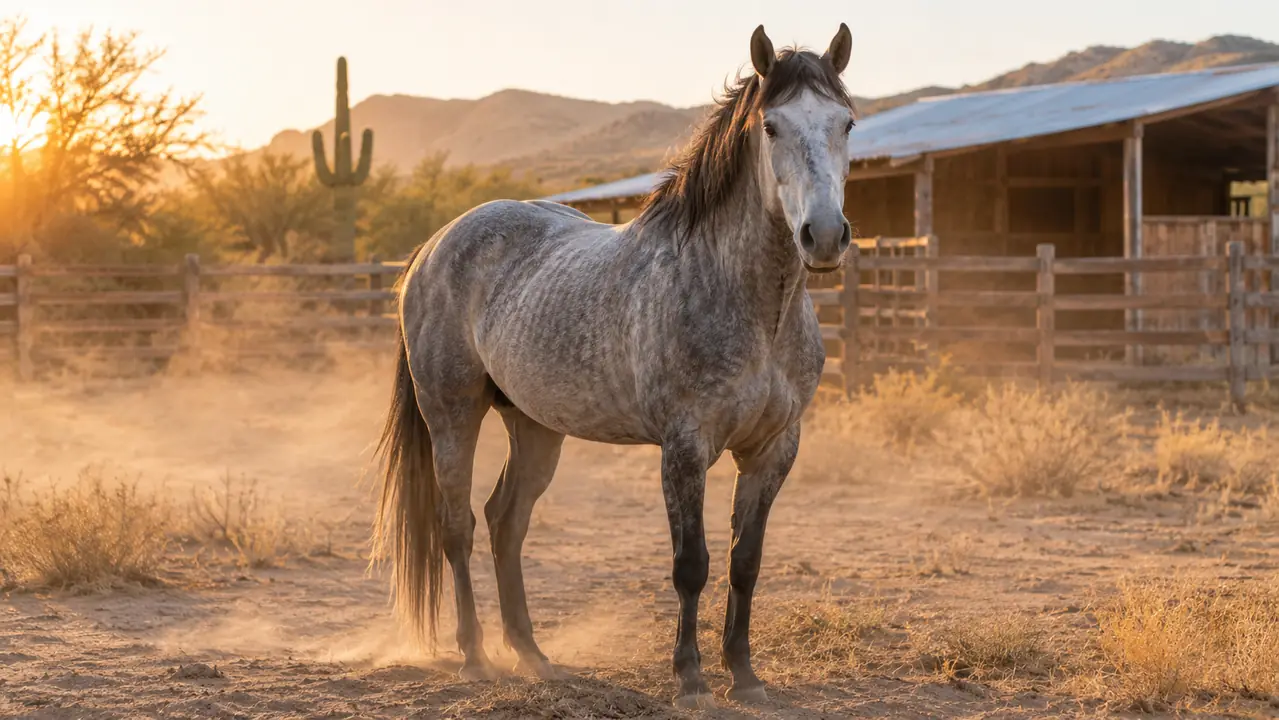
Short answer: I keep Farnam Endure in my barn and I restock it every spring. If your Arabian has thin skin and a light coat you are trying to keep clean, Endure is the bottle I put in people's hands. Absorbine UltraShield EX is not a bad spray and I will not pretend it is. It drops flies faster in the worst two weeks of the monsoon, and you can buy it in town on a Saturday. But across a full desert fly season on three horses, Farnam Endure held its coverage longer between applications and left less film on a gray coat.
Some context, because a comparison only means as much as the barn it comes from. I run three Arabians on a twelve-acre place outside Scottsdale: a four-stall shed-row barn, a wash rack, two dry-lot paddocks and one irrigated pasture. Sahir is a 14-year-old gray gelding and my riding horse, so his coat is the one people look at. Nadia is a 9-year-old bay mare who notices a fly before she notices anything else. Kasim is 22, retired, unshod, and spends his afternoons in the shade at the end of the shed row. Flies show up in April and stay through October here, and the late summer dust storms give you about a two-minute window to spray anything. I started this comparison in May of 2023 for an unglamorous reason: I was buying bottles faster than I could keep track of them and wanted to know which one was worth the shelf space. Same three horses, same routine, spray dates written on the bottle with a marker, reapplications logged in a spiral notebook on the tack room shelf. No borrowed horses at a clinic, no borrowed opinions.
Side by Side: Farnam Endure vs UltraShield EX
| Farnam Endure | Absorbine UltraShield EX | |
|---|---|---|
| Labeled protection window | Up to 14 days, and I get close to that in spring and fall | I was on a five or six day clock by mid-July |
| Sweat and heat | Repelock binds to the hair shaft; coverage held through a sweaty trail ride | Held on a walking horse, slipped on a working one |
| Residue on a light coat | Dries down with no dull film on a gray coat | Left a haze I had to curry out before a show |
| Knockdown in peak pressure | Slows them down; face flies still land at the eye | Flies dropped faster in the first hour |
| Scent | Listed as pleasant; I barely notice it in the aisle | Sharper, and it hangs in a closed barn |
| Buying it locally | I order ahead and keep a spare on the shelf | On the shelf at the feed store in town |
| Cost per bottle | Both sit in the same range | Both sit in the same range |
| Best for | Sensitive, light-coated horses on a steady schedule | Peak-season knockdown when you need a bottle today |
Where Farnam Endure Wins
The first thing is the interval. The label says up to fourteen days of protection, and labels are always optimistic. In April and October I get close to that. I sprayed Sahir on April 6 last spring and he still had coverage on his eighth day, which I know because I wrote it down. In July I reapply about every ten days, and I can tell it is wearing off because Nadia starts stamping her left hind at the fence line a full day before anything lands on her shoulder. On the other spray I was already on a five or six day clock by mid-July. Over three horses and five months that is the difference between a bottle and a half a month and something closer to three, and every one of those applications is a Saturday morning I do not get back. I run out of Saturdays long before I run out of flies.
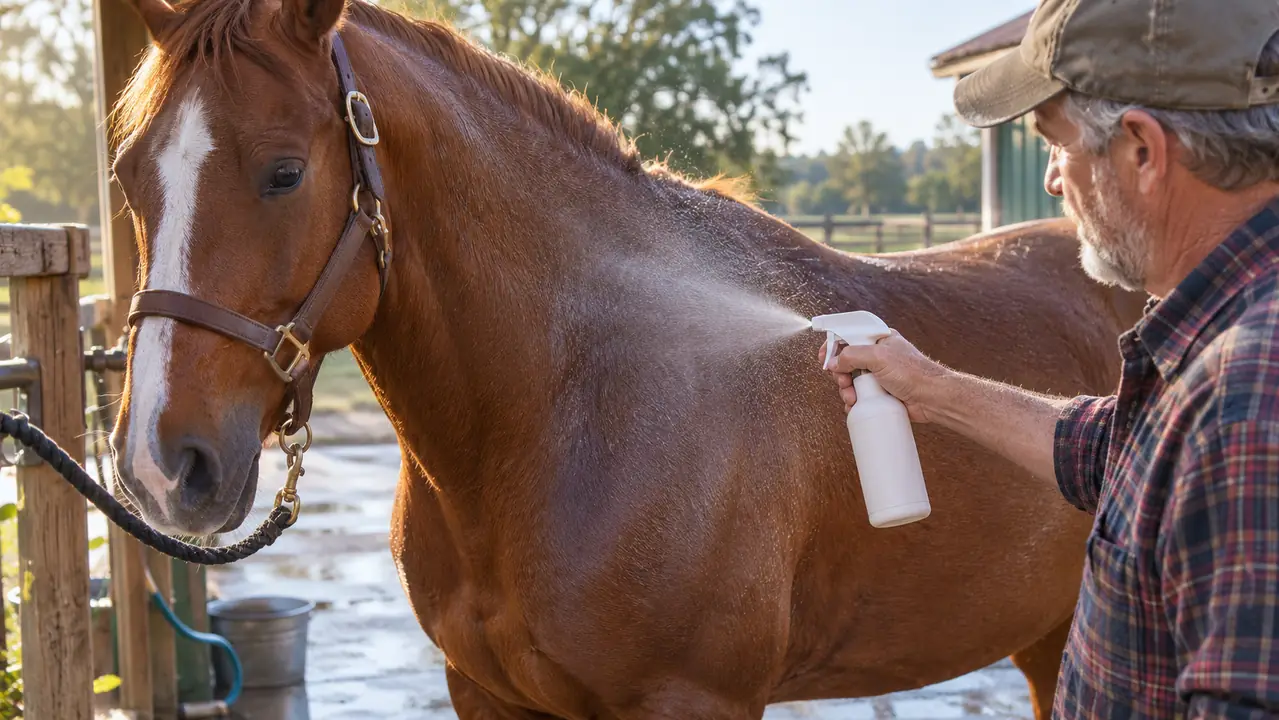
The second is sweat. Repelock is the branded way of saying the formula binds to the hair shaft instead of sitting on top of it. I cannot tell you what that means at the molecular level. I can tell you what it looks like. I rode Sahir four miles of sandy wash in June two years running, he came back wet at the neck and flanks, and the flies were still off him at the tie rail twenty minutes later. Before I trusted that claim I ran a crude test in the wash rack: one shoulder with each spray, a hose on both, then twenty minutes standing in the sun. The other side had flies on it before the Endure side did. One horse, one evening, not science, but it is the kind of thing you remember when you are loading a trailer at dawn.
Third is what it does to a gray coat. Sahir is gray, which means every speck of dust shows and every oil-heavy spray leaves a haze behind. Endure dries down and his coat stays flat. The first time it mattered was a regional open show in April, when I sprayed him in the half-dark at five thirty in the morning and by the time the sun came over the shed row he looked like I had groomed him for an hour. On the other product I had a dull shoulder to curry out at the trailer, with the horse fidgeting and the ring already filling up. That sounds like a small complaint until you have done it twice in one morning before you have had coffee.
Fourth is coverage. The label lists house, stable, face and horn flies, and between those four you have most of what we deal with out here. Face flies are the ones that sit in the corner of the eye and make a horse head-shy, and Nadia is the test case for that. Two summers ago she was swinging her head at the water bucket by nine in the morning. With the interval held steady, she now stands still to have her jaw wiped, which she would not have done for me three years ago. No spray I have used removes face flies completely, but this one stops them from parking there, and that is the most I will claim for any product on the market.
Where UltraShield EX Wins
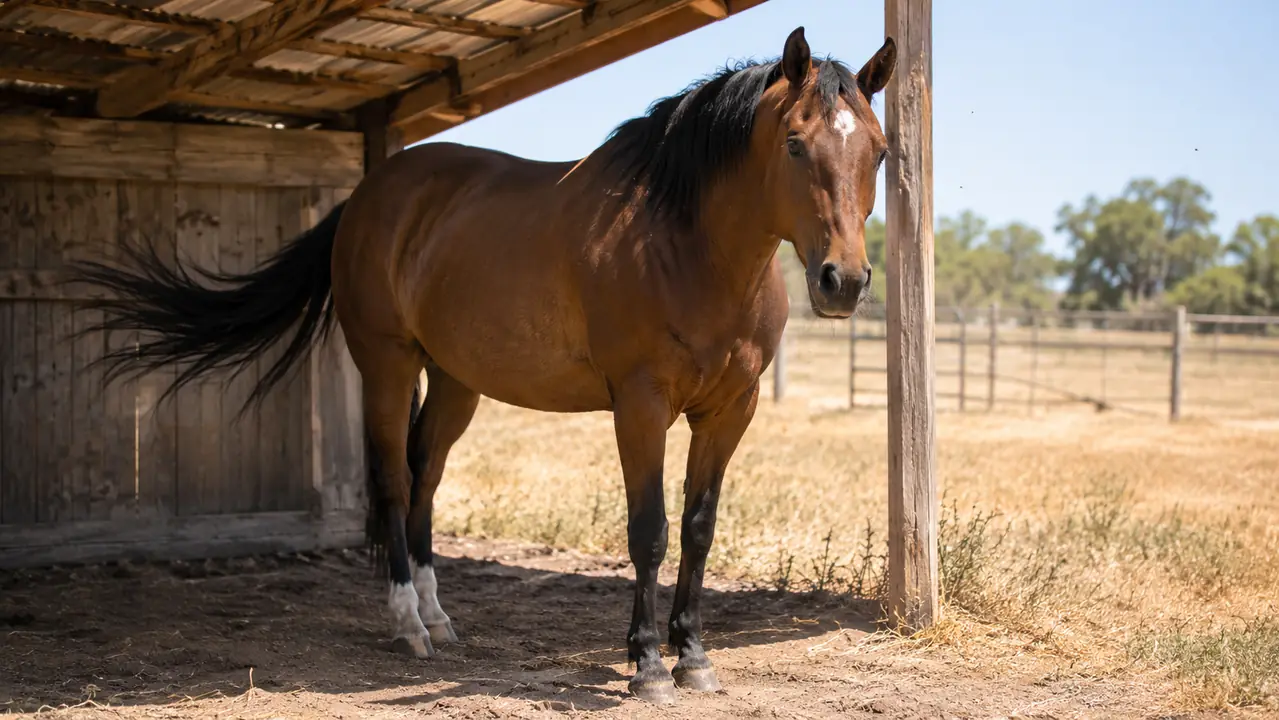
I will give the other bottle its due. In the last two weeks of July, when the flies follow you into the tack room, UltraShield EX knocked them down faster in the hour after application. Not longer. Faster. I remember one afternoon clearly. A monsoon blew through, dropped the temperature eight degrees, and the flies came off the dry lot in a cloud. I had a bottle of each on the tack room shelf. The horse I sprayed with UltraShield had almost nothing on him in ten minutes. The horse on Endure had fewer flies, not no flies. If I had one horse under that kind of pressure and needed relief before I put a saddle on, that is the bottle I would reach for, and it would be the right call.
It is also at the feed store in town. If I run out on a Friday before a show, I can drive twenty minutes and have a bottle in the truck. I have done exactly that twice, once in June and once in September, and both times I was glad the option existed. With Farnam Endure I order ahead and keep a spare on the shelf in the tack room, labeled with the month I bought it. That is logistics rather than chemistry, but logistics is what actually leaves you stranded the afternoon before a show, and no amount of label reading fixes a bottle that is not in the barn.
And I want to be fair about what this comparison is. UltraShield EX is a good spray, not a cheap substitute and not something I would wave a friend away from. I have recommended it to a woman at a clinic whose horse lived in a stall most of the day and whose priorities were not mine. I buy Endure instead for three specific reasons: sensitive skin, a gray coat, and a longer interval between applications. Those are my reasons. They may not be yours, and I would rather you knew that up front than found out after a bottle.
What the Labels Actually Say
Farnam Endure is a permethrin-based liquid spray in a 32 ounce bottle, and the claims are specific enough to check. Up to fourteen days of protection. Kills and repels house, stable, face and horn flies. Sweat-resistant coverage through Repelock technology, which the label describes as binding to the hair shaft. A scent listed as pleasant, which sounds like nothing until you have used a spray that clears the aisle. The bottle measures roughly three by five by twelve inches and weighs about two pounds, so it sits upright in a bucket without tipping. There is also a satisfaction guarantee on the label, which I have never had to use.
Bottle math is what actually bites, so here it is. Two passes per horse at a ten day interval means a 32 ounce bottle lasts me a bit over a month with three horses in July, and longer in April. I plan around that number, not around the label. One bottle lives in the wash rack bucket, one on the shelf, and the open date goes on the label with a marker so I can see how long it has been since I last bought one. Before I settled on either of these I tried a concentrate you mix in a sprayer, because it looked economical. I gave it up inside a week: it separated in the bucket, it stained my hands, and it did nothing at the eye. I also tried a wipe for the face. It worked fine until the day it did not, and I went back to spraying a cloth.
What no label tells you is how a product behaves on a horse that lives outside in desert heat. That is what the last several fly seasons taught me. The number printed on the bottle is the ceiling. Your real interval depends on your horse, your shade, your wind and how much your horse sweats. Mine runs about ten days in the worst of it, and I plan around that instead of around the label. It is the difference between running out mid-week and not.
Sahir came back wet at the neck and flank after four miles of sandy wash, and the flies were still off him at the tie rail twenty minutes later. That is the only test I trust.
The Bottle That Survives a Scottsdale July
Farnam Endure, 32 oz spray, labeled up to 14 days against house, stable, face and horn flies. This is the one I restock every spring for a thin-skinned mare and a gray gelding.
Amazon Check Today's Price on Amazon →Who Should Buy Which
Buy Farnam Endure if your horse has thin skin, a light coat, or both, and if you would rather spray every ten days than every five. Buy it if you already order supplies and can keep a spare on the shelf, and if you want the coat to still look like a coat afterward. It is the more forgiving of the two on sensitive horses, and forgiving is the quality I care about most in something that goes on an Arabian's flank twice a week for five months straight. If you show at all, the residue question alone will settle it for you by the second show.
Buy UltraShield EX if you are in the middle of peak fly pressure and want knockdown now, or if you need to buy something today and the feed store is closer than your inbox. Buy it if your horse does not fuss about sprays and you are not worried about haze on a light coat. It is a legitimate choice and on some properties it will be the better one. It just was not the better one on mine.
How I Apply It on an Arabian
Application matters more than people admit. I curry first, because spray on top of loose dirt does nothing but make mud, and a dusty desert coat holds a surprising amount of it. Then I spray along the neck, shoulder, barrel and flank in the wash rack, out of the wind, in the morning while the flies are still slow. Two passes, not soaking. A soaked horse wastes product and stands there miserable in July heat. On a still morning with the sun already on the barn I can do all three horses in about twelve minutes, which is the only reason the schedule ever holds.
For the face I spray a cloth and wipe the jaw and cheeks. I do not spray toward an eye, ever, no matter what the bottle says about face flies. Nadia will tell you exactly what she thinks of a spray bottle near her head, and she is not wrong to. Kasim gets the same treatment minus the neck, since he mostly stands in the shade and does not need it.
One more habit that has saved me more bottles than any comparison shopping: I write the date on the label with a marker. When I get lazy and skip a week, the date tells me before Nadia does. A marker on the shelf has beaten every clever system I have tried.
Start With One Bottle, Then Judge It on Your Own Horse
Fourteen days on the label, about ten in a Scottsdale July, and a coat that still looks like a coat afterward. That is the whole case for Farnam Endure.
Amazon See Current Price on Amazon →