
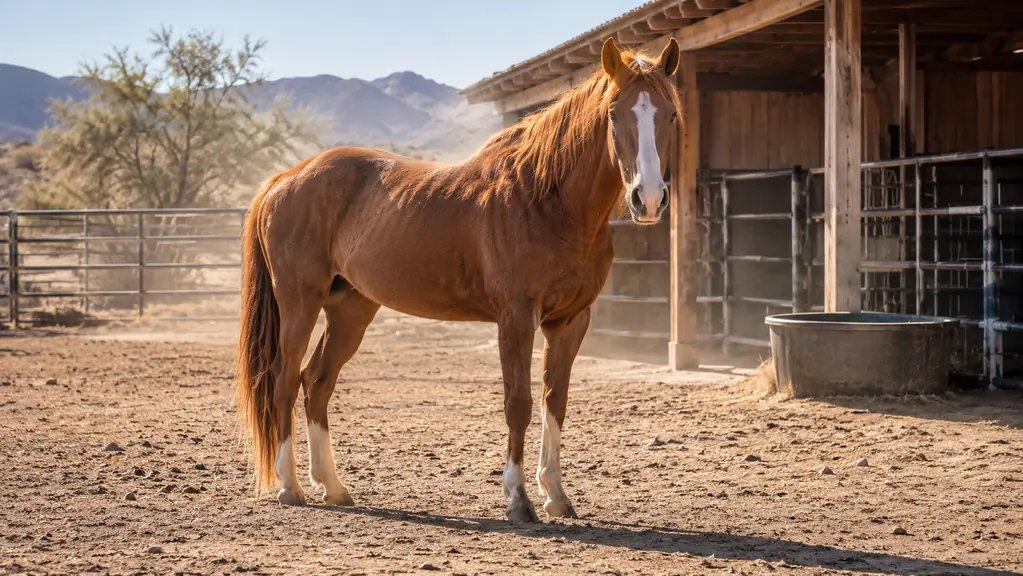
Nadia is the reason I started reading fly spray labels the way I read feed tags. She is a 9-year-old bay Arabian mare with a coat thin enough that you can watch the skin twitch underneath it, and every June she tells me within about four minutes whether a spray is worth keeping. Most are not. I walk her from the wash rack back to the paddock, turn her loose, and by the time I have hung the halter on its hook she is doing the tail-swishing, belly-kicking dance that means I just wasted twenty minutes of both our lives. After twenty-five years of Arabians, I can read that dance from the kitchen window.
Farnam Endure is the one that stayed on the shelf. I have run it on all three of my Arabians through a full desert fly season and into the next one, on a 12-acre place outside Scottsdale where summer runs hot and dry and the late monsoon shoves dust and flies in together. What follows is months of ordinary barn use, the kind where you are spraying three horses in bad light before work, including the parts that do not match the label quite as neatly as I would like.
The Quick Verdict
The longest stretch of real relief I have had from a bottle on this place. Sweat, rain and a horse that lives outdoors still shorten it past the label, so I plan for weekly and take the extra days as a gift.
Amazon Check Today's Price →The bottle that carried three Arabians through August without a morning re-spray
Farnam Endure, 32 fluid ounces, permethrin based, labeled for up to 14 days of protection. At a weekly pace it lasts me about a month across three horses.
Amazon Check Today's Price on Amazon →How I've Used It
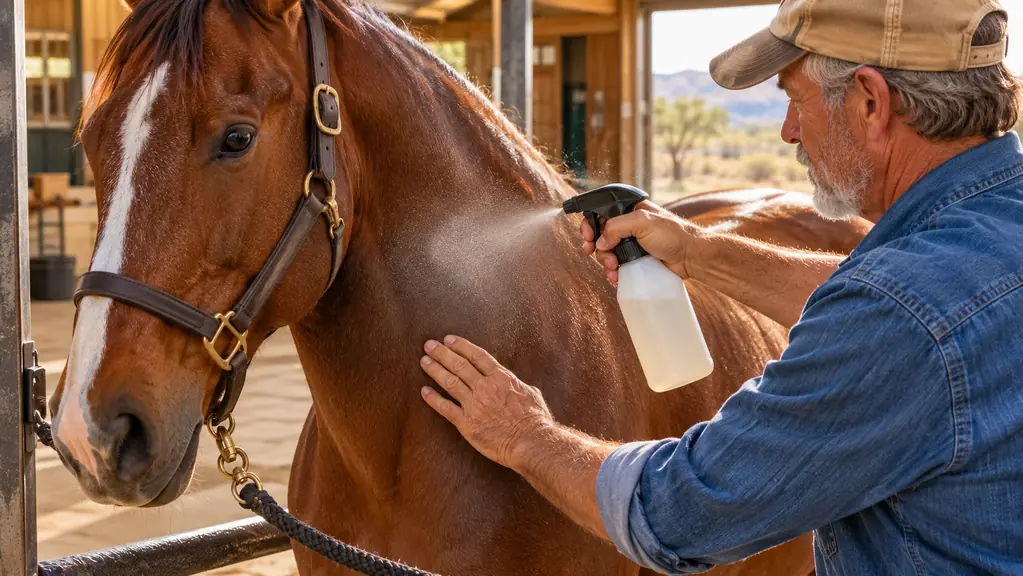
My routine has not changed in twenty-five years. Fly spray goes on after grooming and before the horse leaves the wash rack, because a horse that is already turned out is a horse that is already walking. I spray down the neck, across the shoulders, along the back, around the barrel, then the legs and the belly, which is the part Nadia cares most about. I keep a rag in my back pocket and wipe the spray through the coat in the direction the hair grows. That takes about three minutes a horse, and it keeps the coverage from sitting in one wet stripe down the spine while the flanks stay bare.
I work a weekly schedule in peak season, roughly June through September, and stretch to every ten days in the shoulder months of May and October. The label claims up to 14 days. I have found that seven is where I actually live, with a touch-up on the belly and legs of the two horses that stay out on the irrigated pasture. A 32 fluid ounce bottle lasts me about a month at that pace across three horses, which is the number I plan around when I stock up in spring.
I keep a cheap paper calendar in the tack room and pencil the date on it, and that calendar has done more for my fly control than any one bottle. The single biggest failure I have had with any spray is not the product, it is me skipping a Sunday because the morning got away from me. Three horses at three minutes each, then the bottle goes back in the tack trunk out of the sun when I am done, not left on the rail where it bakes at a hundred and ten degrees all afternoon.
Kasim, my 22-year-old chestnut gelding, is the easy one. He is retired, he stands like a fence post, and he does not sweat much anymore. Sahir, the 14-year-old gray, is the hard test, because he lives out, he rolls, and he comes in from the dry lot with dust worked into his coat like flour. Nadia is the referee. If she is quiet on the cross-ties ten minutes after application, the product is doing its job, and if she is not, I know by noon that I need a different plan.
What 14 Days Looks Like in Desert Heat
Fourteen days is a real number in May. In August, on a horse standing in the sun, it is closer to seven or eight, and I would rather say that out loud than have somebody plan a show trip around a label. The difference is sweat. A horse that sweats through the afternoon is a horse that is slowly losing coverage, and no spray I have used survives a hard workout followed by a rinse.
There was a Tuesday in early August, a hundred and eight on the porch thermometer, when I sprayed Sahir at six in the morning and turned him out with the others. By four that afternoon he had a cluster of flies working the inside of his hind legs and he was cross about it. Same bottle, same application, seven days earlier, and he had been close to clean. That is the honest shape of a desert summer. The product did not fail, the day was simply hotter and longer than the label assumes it will be.
Where Farnam Endure holds up better than most is the durability of the coverage itself. The label credits that to what Farnam calls Repelock technology, described as binding to the hair shaft so the active ingredient stays where you put it. I cannot verify a mechanism from my wash rack, but I can verify the behavior. Sprayed onto a dry coat and worked in with a rag, it is still doing something on day four. The bottles I used before this one were finished by the next morning, and I had the stomping horse to prove it.
The pressure here is house flies and stable flies for most of the summer, with face flies moving in on the pasture horses once the monsoon gets going in late July. The label covers house, stable, face and horn flies, and I would say the stable fly control is the strongest part of it. The flies that gather on Kasim's legs and stay there are the ones that used to drive me to distraction, and this is the first product where I stopped noticing them. Face flies are the weak spot. I still use a mask on Sahir, because nothing I have poured into a bottle has kept them off his eyes for long.
Permethrin and What It Actually Does
The active ingredient is permethrin, which has been the workhorse of the horse fly spray aisle for decades. It is an insecticide, not a fragrance, and it kills as well as repels. That distinction matters if you have ever watched flies crawl up a horse's legs and simply stay there. With a repellent-only product they land, get irritated, and resettle two inches over. With this one they land and they stop, and the difference in how a horse stands is obvious within an hour.
The practical consequence is that you should not be casual with it. I spray in the barn aisle with both doors open, I keep it away from the water trough, and I do not put it on a horse with an open cut on its legs. I do not spray anywhere near eyes, mine or theirs, which is why I put a little on a cloth and wipe the head with that instead. None of that is a knock on the product. It is what a permethrin product asks of the person holding the bottle, and it belongs in an honest review.
The scent is mild by fly spray standards, and that matters more than it should in July, when you are standing in a closed aisle doing three horses in a row before the heat arrives. I have used products that smelled like a chemical spill and left me with a headache by the second horse. This one does not, and I have never had a horse object to it, including Nadia, who objects to most things.
Where It Comes Up Short
Rain ends it. There is not much rain here for most of the year, but when the monsoon breaks, the coverage is gone and I start over. The first real storm of last season came through on a Thursday night, hard enough to run off the barn roof and puddle the low corner of the dry lot. I had sprayed all three that morning. By Friday noon Sahir was stomping again, and I did the whole herd over rather than wait and see. The label does not claim rainproof and it is not. If you keep horses somewhere wet, treat this as a weekly product and be pleasantly surprised when it stretches, not the other way around.
Second, it will not fix the flies that are breeding on your place. Spray is a barrier, not a population control. I hang fly traps, I drag the paddocks twice a week, and I keep the manure pile as far from the barn as the property allows. When I get lazy about any of that, no bottle keeps Nadia comfortable, and I have proved that to myself more than once in a wet August.
Third, it leaves a light residue where it dries, and on a gray that shows up as a dull patch across the shoulder until you curry it out. That is cosmetic and it comes off with ten minutes of work, but I show Sahir a few times a summer and I notice it in the ring photographs. If you are prepping for a halter class, plan to groom it out the morning of rather than the night before. A soft brush will not move it. A curry comb and a damp cloth will.
What I Was Using Before
For years I used a pyrethrin-based spray I could buy by the gallon, and it worked well enough for about half a day. That is fine for a show, where you spray in the morning and the horse stands in a stall until your class. It is close to useless for a horse that lives out on a dry lot, which is what I have. I was reapplying every single morning and still finding Nadia miserable by two in the afternoon, tail going like a metronome and both hind legs stamped red.
I also tried a wipe-on product for one season. The application was pleasant and it left the coat glossy, and I wanted it to be the answer because it was so easy to use. It did nothing for the population of stable flies that work Kasim's legs, which was the specific problem I needed solved. I still have most of that bottle in the tack room, three years on, and I use it on the trailer ride to a show because it makes the coat look nice and I already own it. The lesson I took from that year is that I want something that kills, not just something that makes the horse smell like a candle.
What I have now is a schedule rather than a product. Farnam Endure every seven days in the heat, fly traps emptied on Sundays, paddocks dragged twice a week, and masks on the pasture horses during the monsoon. The spray is one part of that, and it is the part that changed how the horses behave in July. When I run out and substitute whatever the feed store has on the shelf, I can tell within two days, and so can they.
What I Liked
- Coverage holds for days on a dry coat instead of hours
- Kills and repels house, stable, face and horn flies rather than only repelling them
- Holds up through sweat better than anything else I have used on a horse that lives outdoors
- Mild scent, workable in a closed aisle with three horses to do
- 32 fluid ounce bottle covers about a month of weekly use on three horses in my routine
Where It Falls Short
- Rain and hard sweat end it early, so weekly reapplication is realistic through summer
- Face flies still get through, and I use a mask for that
- Leaves a light residue that dulls a gray coat until it is curried out
- Permethrin means real handling care around eyes, water and open cuts
- No fly spray solves a paddock that is breeding flies
Sprayed onto a dry coat and worked in with a rag, it is still doing something on day four. The bottles I used before this one were finished by the next morning.
Who This Is For
This is for the owner whose horses are turned out, not just stalled. It is for the person who is tired of spraying at seven in the morning and finding the horse stomping by noon. It suits a small herd where you can hold a weekly schedule and where the pressure is stable flies and house flies around legs and belly, which is most of the desert Southwest from June through September.
It also suits anyone who wants one bottle doing two jobs. I spent years layering a repellent on top of a bait and still fighting the same flies. Having something that kills on contact as well as discouraging the ones that never land took a step out of my morning, and on a three-horse barn that step was the one I minded most.
Who Should Skip It
If your horses live somewhere wet, or if your habit is to spray before a ride and rinse after, you will not get the labeled window and you should expect to reapply. If you have a horse with a known sensitivity to permethrin, or a setup where a freshly sprayed horse shares a water source with others, talk to your vet before you buy instead of taking my word for it.
And if the flies are coming off a manure pile you have not moved since spring, buy a drag harrow first. Spray on top of a breeding ground is effort spent to lose slowly. Fix the source, then buy the bottle, then hold a schedule. That order is the whole review in three sentences.
It will not replace a drag harrow, but it will get you through August
The 32 fluid ounce bottle of Farnam Endure is what I keep two of on the shelf from May to October. Weekly application, three horses, one month per bottle.
Amazon Check Today's Price on Amazon →