
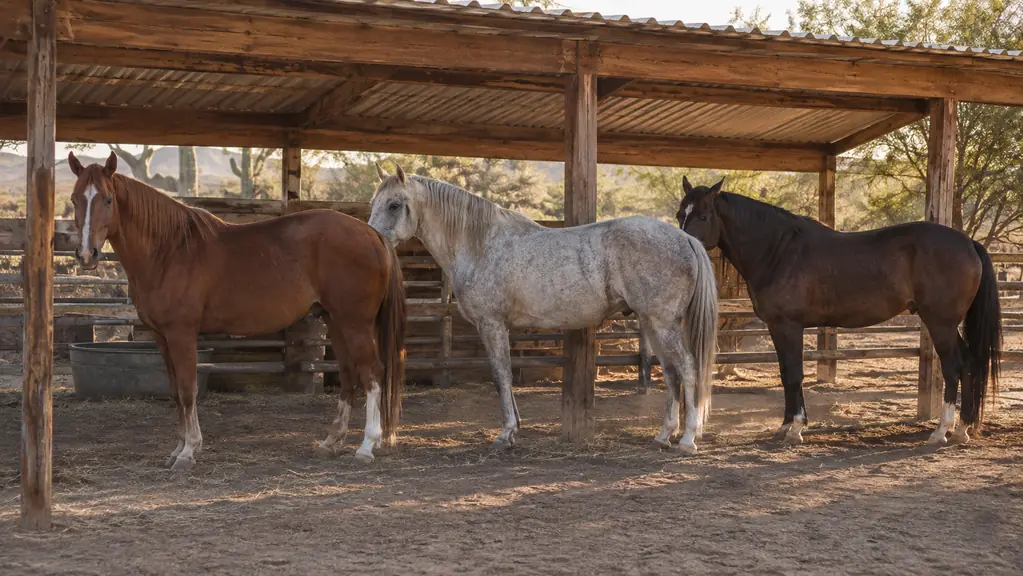
Fly season in the desert does not announce itself. It shows up the first morning Nadia starts stomping in the cross-ties before I have picked a hoof, and by the second week of June I am walking the barn aisle with a spray bottle in each hand, spraying three horses twice a day and still watching them swish. Arabians are thin-skinned. Mine are worse than most. Last June I finally timed it out of curiosity: eleven minutes to spray all three from ears to hocks, twice a day, and by the second afternoon Nadia was already dancing at the rail again. That arithmetic is what sent me looking for something that held.
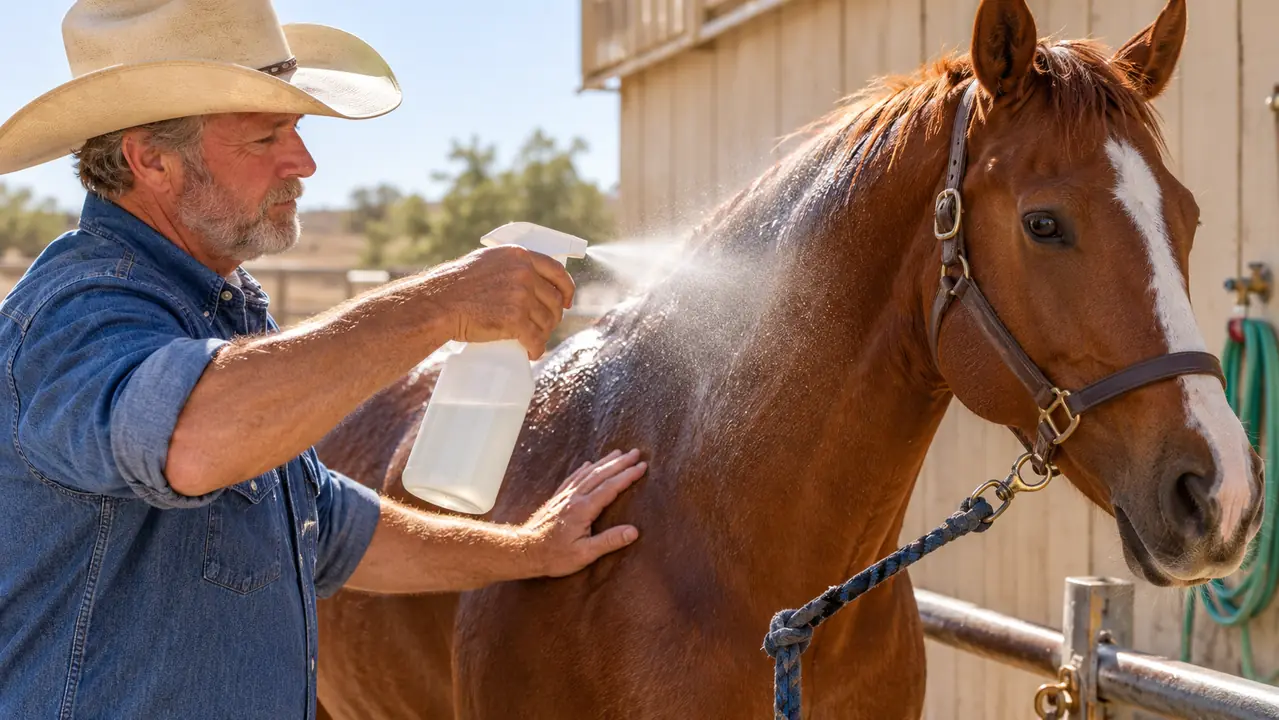
That is the hole Farnam Endure filled for me. It is a 32 ounce spray with permethrin as the active ingredient, labeled for up to 14 days of protection, and built on what the company calls Repelock technology, which binds the repellent to the hair shaft so sweat does not carry it straight off. I have kept Arabians on this place outside Scottsdale for more than 25 years and I have burned through a tack room shelf of sprays. Here are ten reasons this one stays in the rotation.
One bottle, fourteen days, three horses covered.
Farnam Endure is the spray I reach for first in June, before the flies are bad and before the daily re-spray habit sets in.
Amazon Check Today's Price on Amazon →It stays on through a sweat instead of sliding off with it
A horse sweats in July the way a horse sweats, and most sprays are gone by the time I walk back to the house. The Repelock side of this formula is the part that matters to me. The repellent binds to the hair shaft instead of sitting on top of it, so a wet neck at noon does not mean a bare neck at two. I noticed it first on Sahir after a ride. Forty minutes of walk and trot in the arena at nine in the morning, which is late enough here to be genuinely hot, and he came back with his chest and neck soaked through. On the sprays I used before, a ride like that meant a full reapplication before he went back out. This time he stood in the paddock at two o'clock and never lifted a hind leg.
Fourteen days of cover changes how a three-horse morning runs
The label says up to 14 days. Even if I get ten in real desert conditions, that is ten mornings where I am not spraying three horses before coffee. With Nadia, Sahir and Kasim all needing cover, the gap between a daily spray and one every two weeks is close to two and a half hours a week I get back, and I spend it on hooves and hay instead.
It goes after the flies that actually land on an Arabian
This is labeled for house, stable, face and horn flies. Those are the four I see. Stable flies work the legs and belly, face flies sit at the corner of the eye no matter how often you wave them off, and horn flies ride the shoulders all afternoon. A spray that only handles one of those is a spray I still have to supplement with something else. On a still afternoon in July I can put a hand flat on a shoulder and count eight or ten horn flies in a minute, and the lower legs are worse. Cover all four and the bottle has earned its shelf space.
A thin-skinned mare stops dancing at the tie rail
Nadia is nine and the most fly-sensitive animal on the property. Before I found a spray that held, she shifted her weight hip to hip and tried to rub her face down her own shoulder. Now she stands in the cross-ties and rests a hind foot. A horse that is not fighting flies is a horse that is not burning calories and not inventing new ways to scrape herself on the rail.
A gray horse gets left alone long enough to stay clean
Sahir is fourteen and gray, which means every stain shows. Flies make him stomp and roll, and rolling in a dry lot is how a gray horse turns the colour of the ground he is standing on. When the spray is holding, he stands in the shade instead of grinding dust into his coat, and I am not currying half the paddock out of him before a ride.
It takes the panic out of a hundred-degree afternoon
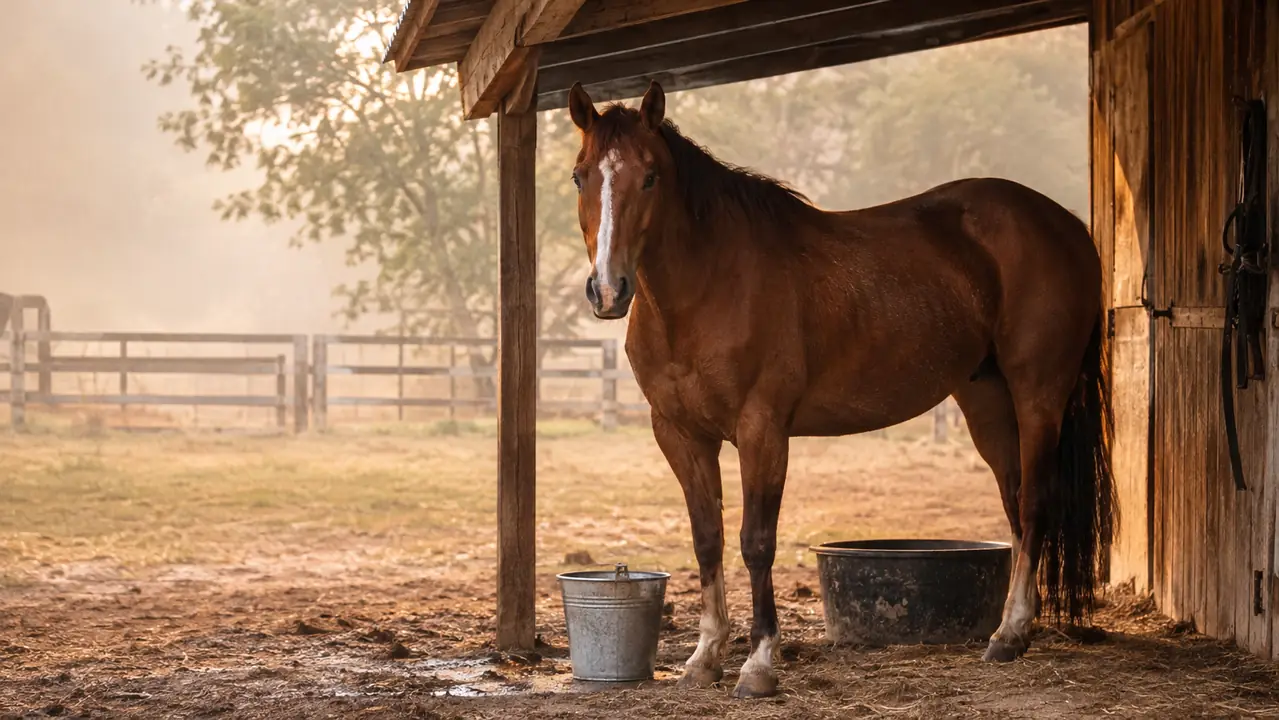
There is a point in the afternoon here where heat and flies peak together. That is when a horse with no cover paces a fence line instead of standing still. Cover that lasts means they can stand in the shade of the shed row through the worst of it. In that moment I care less about the spray itself than about three horses standing quietly.
The scent does not announce itself to a nervous horse
The label calls the scent pleasant, and I would describe it as mild. That matters with Arabians, who notice everything. I have used sprays that made Nadia throw her head before the nozzle came anywhere near her. This one I can apply at the shoulder while she is eating and she keeps eating.
A retired gelding who cannot outrun anything still gets covered
Kasim is twenty-two and retired. He does not run from flies, he just stands and takes them, which is worse to watch. His legs are the part I worry about, and stable flies work legs. He came to me with thin soles and a history of abscesses, so every bite near the pastern is one more thing I am watching for two weeks afterward. A long-lasting spray means the old guy in the near paddock gets the same protection as the riding horse without me making a second trip down the aisle with the bottle.
One 32-ounce bottle outlasts three short-acting ones
The arithmetic is simple. A spray that lasts a few hours gets reapplied, and reapplied, and the bottle empties in a couple of weeks. Something rated for up to 14 days means fewer passes, less product per horse per month, and fewer trips to town for a replacement. Farnam puts this up in a 32 ounce bottle, and that size carries three horses through most of a desert summer. I would rather keep one bottle that holds than four that do not.
It makes a show morning one less thing
We haul to regional open shows in a two-horse bumper-pull behind an older pickup, and show mornings start before light. Spraying three horses and then loading them means the cover has to survive the trailer ride and the warm-up. When I spray the night before and it holds, that is one task off a morning that already has too many.
What I'd Skip
Two honest caveats, and one habit of mine. First, a spray is not fly management. I still pick the paddocks, still run the fans in the shed row, and still use masks when the face flies get bad. Farnam Endure makes that work easier, it does not replace it. Second, this is a permethrin product labeled for horses one month and up, so read the label and follow it rather than my habits. The habit: I curry and brush before I spray, every time. The whole claim on the bottle rests on the product binding to the hair shaft, and I want it on the hair, not on three days of dry-lot dust. In July that means a real grooming pass, not a wave of the brush. If you want something that smells like nothing at all, this is not that, and I will not pretend otherwise. It is a working spray for a working barn.
Ten days of real cover in desert heat is ten mornings I am not walking the aisle with a bottle while three horses stomp.
Get a bottle in the tack room before the flies get ahead of you.
Thirty-two ounces, up to 14 days of labeled protection, and one less task on a summer morning.
Amazon Check Today's Price on Amazon →