
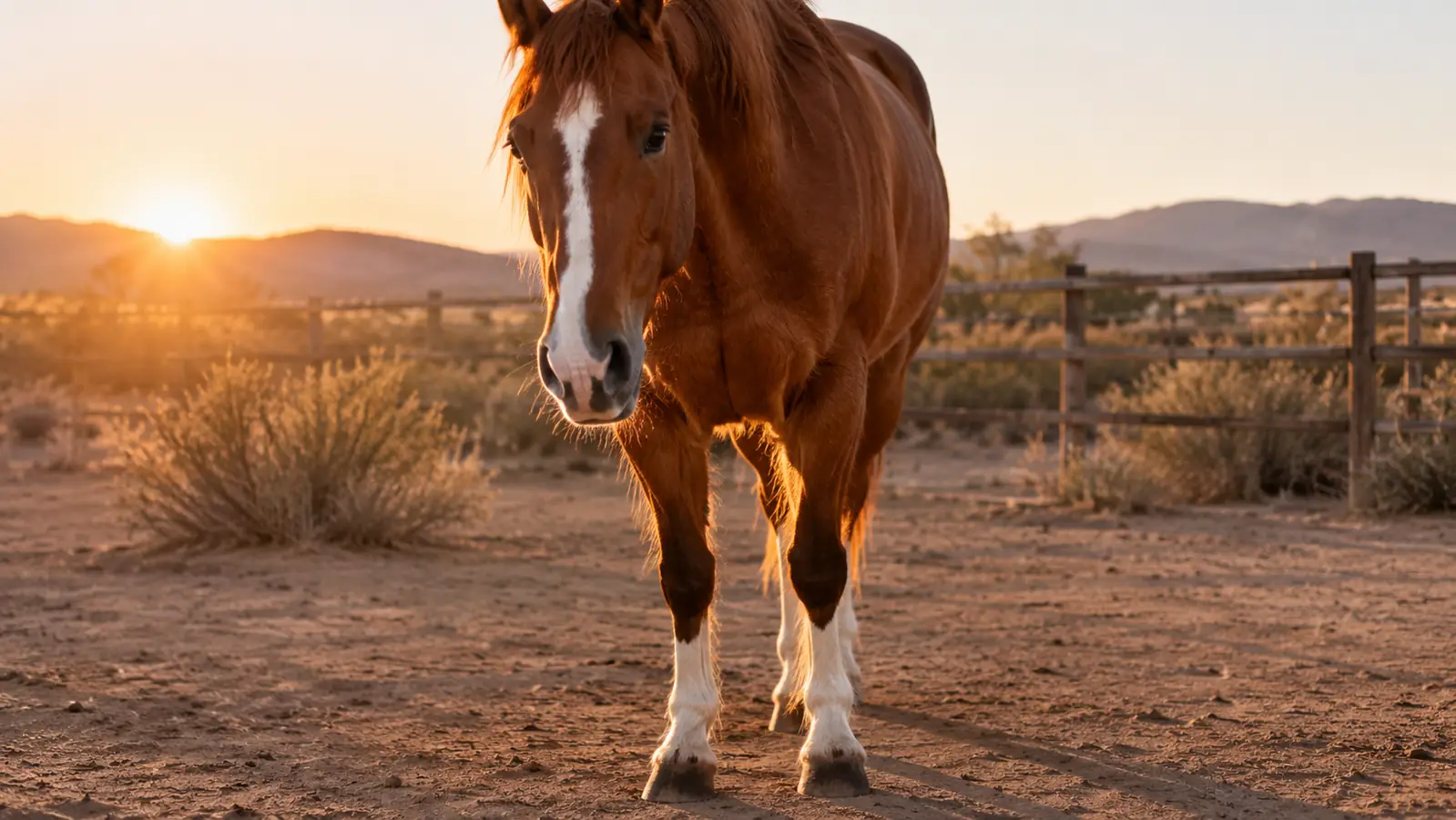
Kasim is 22 this spring, retired, and the first horse I check every morning. Last August I ran my thumb down the outside of his left front hoof and felt the wall give, just slightly, like a fingernail that has been in water too long. Arizona does that. Bone-dry in June, then a monsoon week where the low corner of the paddock holds water for three days, then back to powder. Hooves do not get to ease into any of it. That ridge is why a hoof conditioner stopped being a show-season extra around here and became something I buy in the same breath as fly spray.
The product I settled on is Farnam's Deep-Penetrating Hoof Conditioner in the 32 ounce size, and it has been on my shelf long enough that I have opinions about where it helps and where it does not. Farnam sells it as a penetrating liquid with avocado oil and glycerine that goes after moisture retention rather than coating the outside of the hoof. What follows is what three Arabians, one farrier and a lot of desert summers taught me about it.
The Bottle That Lives Next to My Hoof Pick
One liquid, twice a week, three horses. See the current price on the 32 ounce size before monsoon season gets here.
Amazon Check Today's Price on Amazon →It Stops the Wall From Going Brittle Between Farrier Visits
My farrier comes every six weeks. That is 42 days of sun, dust, and in late summer, standing water in the low corner of the paddock. Hoof wall does not fail dramatically in that window. It dries, it dulls, and then you find a horizontal crack right where the old growth meets the new. This conditioner is formulated to attract and retain moisture in the hoof, and that was the piece I was missing. Not a dressing sitting on the surface. Something the wall takes in.
It Works at the Coronary Band, Where New Hoof Actually Grows
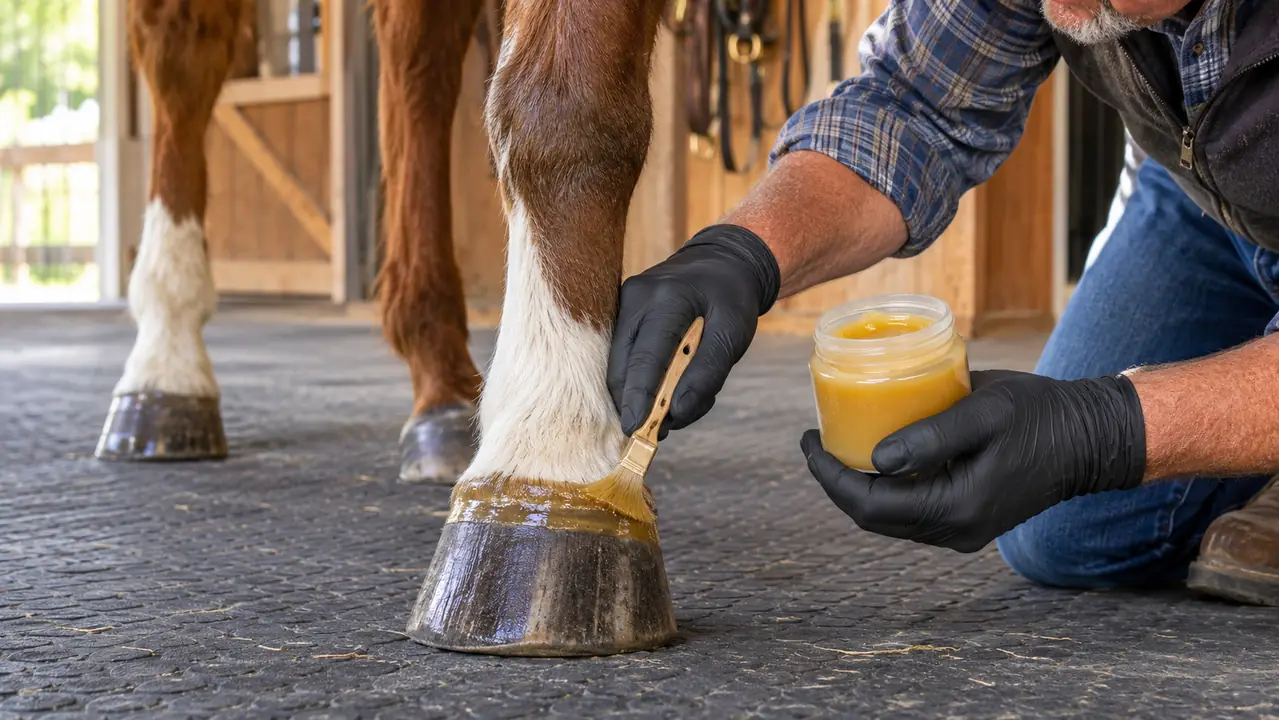
Most hoof products get painted on the wall and stay there. The coronary band is the seam just above the hairline, and it is where new wall is produced. Farnam lists collagen support at the coronary band as part of what this product does, and that matches what I see. The new growth coming down on Kasim's fronts has been tighter and smoother since I started working a fingertip of conditioner up into that seam instead of only wiping the wall. The difference shows up months later, in the bottom two inches.
It Handles the Desert-to-Monsoon Swing Arizona Throws at Hooves
June here is single-digit humidity and ground like fired clay. Then the monsoon rolls in, the paddock holds water, everything swells, and a week later it is powder again. Hooves move through that cycle four or five times a summer. A conditioner that draws moisture in and holds it gives the wall something to flex with instead of cracking against. I apply it heavier the week before rain is forecast and back off once the ground dries out. That rhythm matters more than the amount I use.
It Buys Kasim Comfort in Retirement
Kasim is 22, unshod, and not ridden. What he gets is a dry lot, soaked hay cubes, and a hard look at his feet every morning. Older horses grow hoof slower and thinner, and a thin sole on packed desert ground shows up as short strides on turnout. Since the conditioner went into the routine, he walks out to the far paddock without that hesitation at the gate. I cannot prove causation. I can tell you he moves better and I am not arguing with it.
It Covers Wall, Sole and Frog in One Pass
There are three places I want conditioner: the wall, the sole, and around the frog. Doing that with three different products is how a grooming routine dies in week two. One liquid, one application, done. I work it in with a gloved hand, wipe the excess off the wall so dust does not stick, and I am out of the cross-ties in under five minutes per horse. That is a routine I will actually keep in August, when it is 108 degrees and I want to be back inside.
Pine Scent, Pine Tar Free
Worth knowing if you have ever had a hoof product turn into a sticky dust magnet in the heat: this one lists pine as its scent and pine tar as something it does not contain. Pine tar is the old barn standby and also the reason some horses finish the day with a greasy coat of arena sand stuck to their lower legs. Farnam went the other direction. It smells like a cut pine board, it settles without leaving a film, and the shavings stay in the stall where they belong.
It Fits a Six-Week Farrier Schedule Without a Production
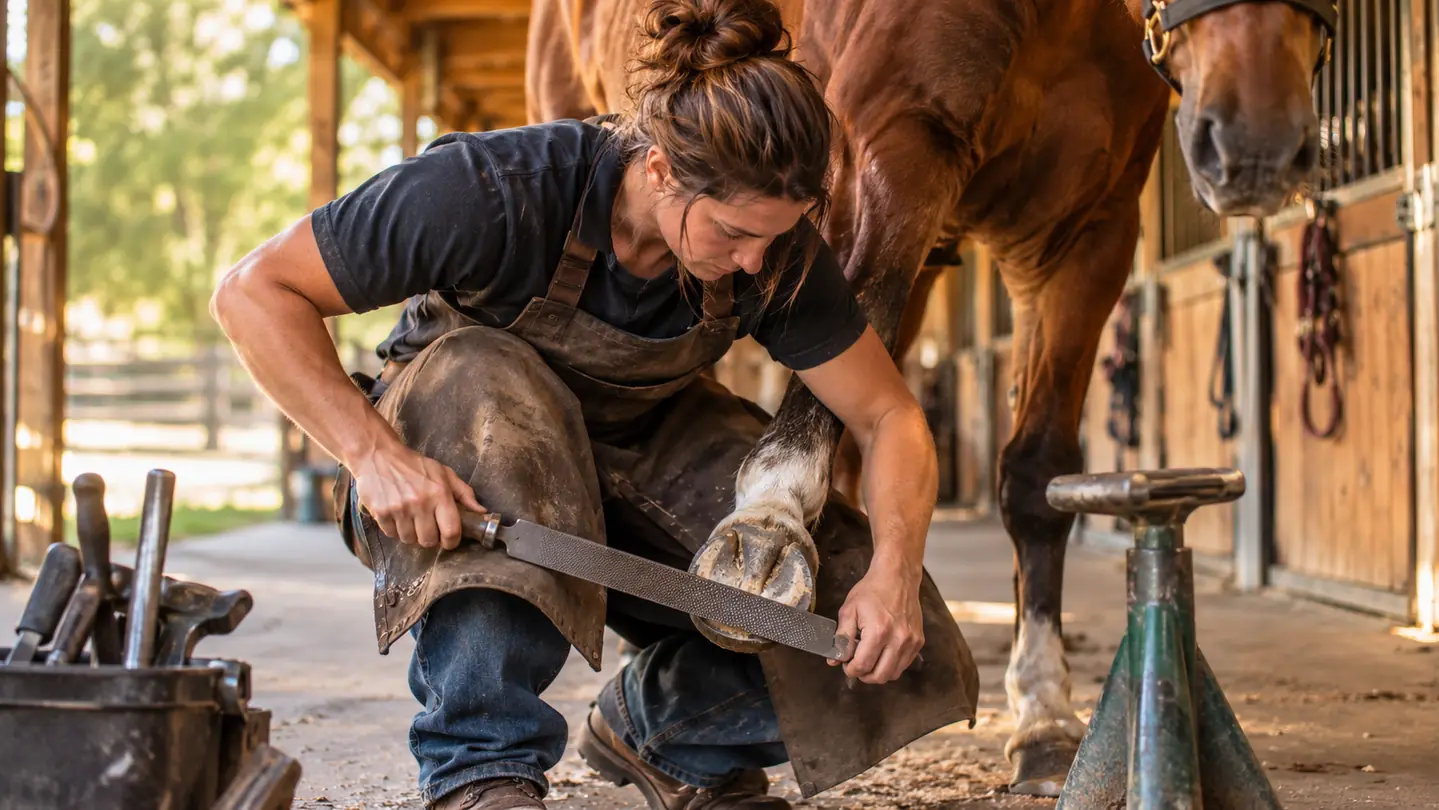
Hoof care is a schedule, not an event. My farrier is booked six weeks out and I would rather he not spend his visit explaining what I should have been doing in between. The bottle sits on the shelf by the wash rack and comes out twice a week, plus the evening before he is due so the feet are clean and workable. That is the whole program. No soaking boots, no wraps, no fifteen-minute protocol. The product fits the schedule I already have, which is the only kind that survives a Scottsdale summer.
Nadia Stands Still for It
Nadia is 9, bay, and thin-skinned. She is fine about her feet as long as you are quick and you are not fumbling with equipment. Anything that needs a bucket, a sponge and both hands gets a hind foot cocked at me inside thirty seconds. A liquid I can work in with one hand while the other stays on her pastern is the difference between a two-minute job and a rodeo. If your mare is a fidget, this is a real consideration and not a small one.
One 32 Ounce Bottle Carries Me Through Show Season
Three horses, twice a week, for roughly six months. That is the math I run before I buy anything in a large format. The 32 ounce bottle has taken me from March through a regional open show schedule and into fall without a reorder, and that includes the heavier application around the monsoon. Farnam also backs it with a satisfaction guarantee, which is not why I buy it, but it is why I did not mind trying it the first time.
It Is the One Hoof Item I Restock Before It Runs Out
Every barn has a product that runs out at the worst possible moment. This stopped being that one. When the level drops below a quarter, I order another, because the week I skip it is the week Kasim's wall tells on me. That is not a dramatic endorsement. It is a boring one, and boring is what you want from a hoof conditioner. It shows up, it does the job, and it does not ask anything of you that you will not do in July.
What I'd Skip
A conditioner is not a fix for a hoof that needs a farrier, and it is not a replacement for forage, turnout and a dry place to stand. If your horse has an abscess, a hot foot, or a wall separating at the white line, you call your farrier and your vet, not the tack shop. This product conditions. It does not treat. I also skip it on show morning, because a freshly conditioned hoof collects whatever the arena is made of, and I go light for the two weeks after a trim while the sole is still settling. And if you are hunting for one bottle that also deals with thrush, keep hunting, because this is not that bottle.
My farrier set the nippers down, looked at Kasim's front wall, and asked what I had changed. That was six weeks in.
Put the Bottle on the Shelf by the Wash Rack
Twice a week, six weeks out from the farrier. That is the whole program. Check the current price on the 32 ounce size and start before the rains do.
Amazon Check Today's Price on Amazon →