
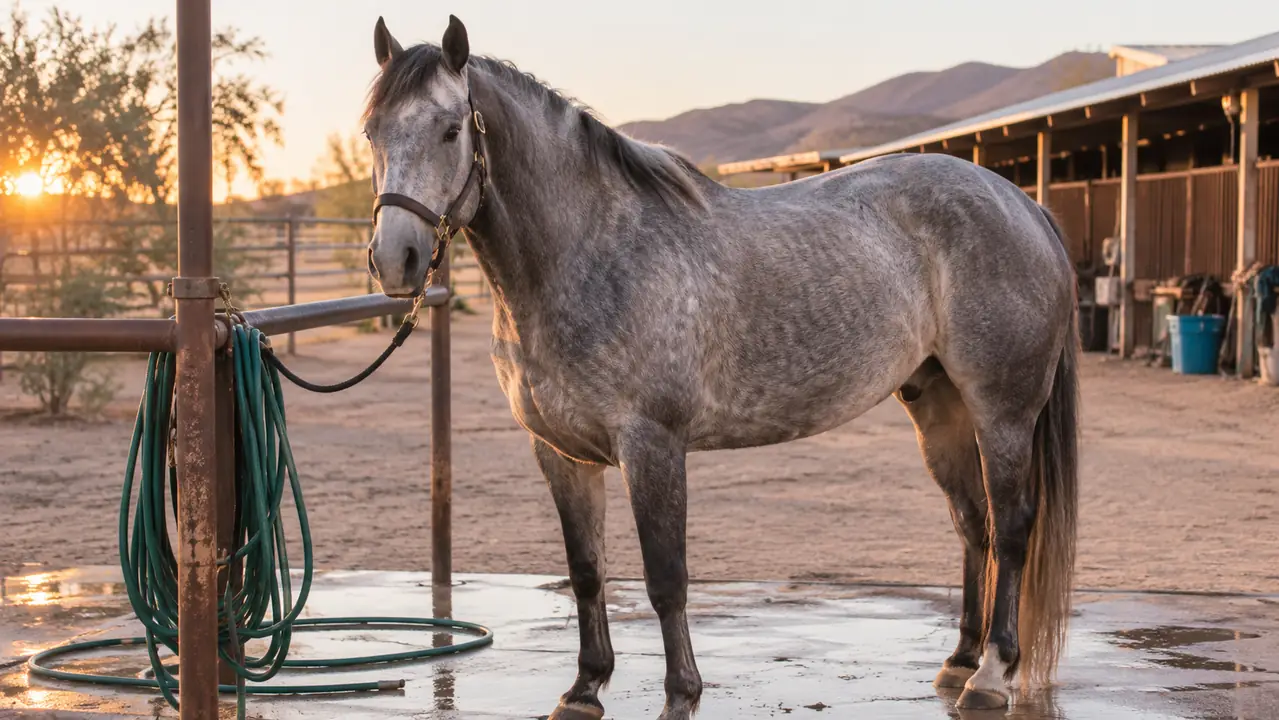
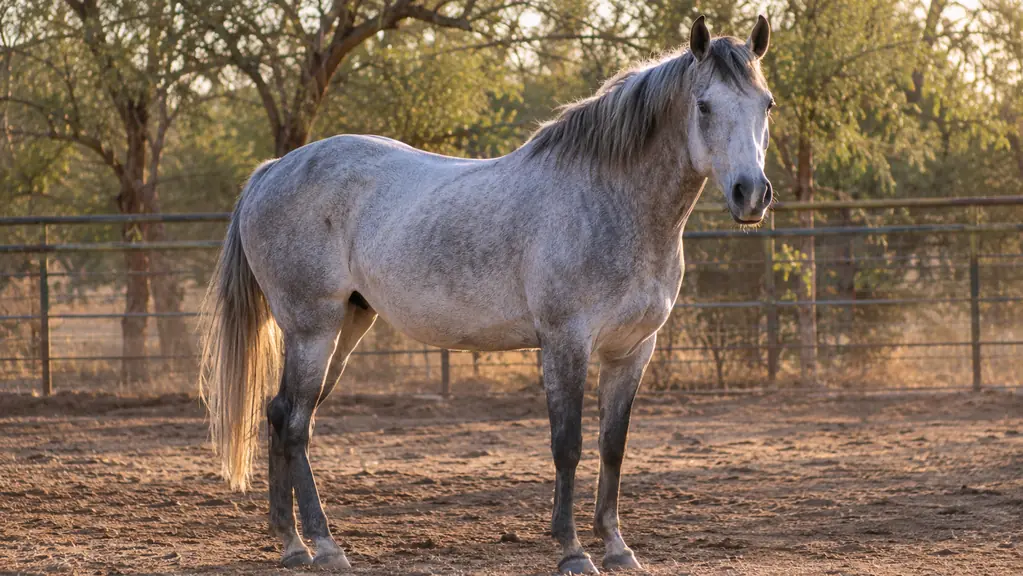
Sahir turns yellow. He is a 14-year-old gray Arabian gelding, my main riding horse, and every year around late July the same thing happens. The spot where his barrel meets his elbow goes the color of weak tea. The backs of his hind pasterns pick up a stain line from the dry lot. The underside of his neck, which he insists on dragging along the fence rail, looks like it has been dipped in coffee. Gray is the most honest coat color a horse can wear. It shows every hour he spent standing in the irrigated pasture when he was supposed to be out on dirt.
The only thing that has reliably moved those stains for me is Cowboy Magic Shine In Yellowout, a whitening gel shampoo in a 32 ounce bottle that lives at my wash rack all summer. Most of what people reach for first does not solve it. I have tried the blueing rinses that turn your hands purple, the dish soap that strips every bit of oil out of the hair, and the strategy of letting the sun bleach him out, which looks fine for about four days and then leaves the coat dry and flat. What actually works is a shampoo built for the job, put on correctly, and rinsed longer than feels reasonable. I am not going to oversell the bottle. It is a good tool used properly, and the properly part is most of what follows.
The Shampoo That Lifts Yellow, Not Just Dirt
Cowboy Magic Shine In Yellowout is the whitening gel shampoo I keep at the wash rack for Sahir's gray coat. Aloe vera and chamomile, easy to rinse, safe on all coat colors. If you are starting with a stained gray, start here.
Amazon Check Today's Price on Amazon →Step 1: Identify Which Yellow You Are Dealing With
Not all yellow comes off the same way, and this is where people lose an afternoon. Grass stain is plant pigment sitting on the hair shaft. Sweat and dust make a film that traps dirt against the skin. Urine on the hind legs is alkaline and sets fast. Sun bleach is not a stain at all. It is the hair itself lightened by ultraviolet, and when that is what you are looking at, no shampoo on any shelf will put the color back, because there is nothing sitting on the hair to remove.
I look at Sahir in good daylight before the hose comes out, because once he is wet everything reads as the same shade of gray. Rub a hand against the grain on his barrel and look at the skin underneath. If the skin is grubby, you are dealing with film and the wash will be straightforward. If the hair looks brassy from the middle of the strand to the tip while the skin is clean, that is sun, and the goal becomes management instead of removal.
Grays stain in places people forget to check: under the jaw, at the point of the shoulder where a blanket rubs, along the back of the hind pasterns, at the tail head, and between the front legs. I find all of it with a curry comb and my fingers first, then decide where the extra shampoo goes. Ten seconds of looking saves you from washing the whole horse twice.
Step 2: Wet Him Down and Loosen the Dirt Before Shampoo Touches Him
Hose water in Arizona in July comes out of the tap hot enough to steam. I let the hose run into a bucket until it cools, then wet him down at the wash rack. If the water is too warm he will dance and the whole job takes twice as long, and a dancing horse is a horse who steps in the bucket.
Wet the entire horse, not just the stained spots. A half-wet horse means shampoo running down into dry hair, and dry hair holds residue that catches dirt for the next week. Soak the mane, the tail, and the places where the legs meet the body. Those are the spots where sweat collects hardest and where a quick rinse never quite reaches.
Then loosen the dirt before the shampoo goes on. I use a rubber curry in circles and my fingers to break up dried mud along the belly and flank. Do not take a stiff brush to dried mud. You will break hairs, leave a rough patch, and that patch will catch more dirt tomorrow. Water and fingers do the work. The shampoo only needs a clean surface to act on, so there is no benefit to scrubbing harder than the dirt requires.
One more thing on this step: check the water running off him before you reach for the bottle. If it is already running brown, keep going until it clears. Rinsing the loose dust off first means the shampoo is doing stain work instead of mud work, and I get a better result from a smaller amount of product every time.
Step 3: Put the Shampoo on the Stains First, Not the Whole Horse at Once
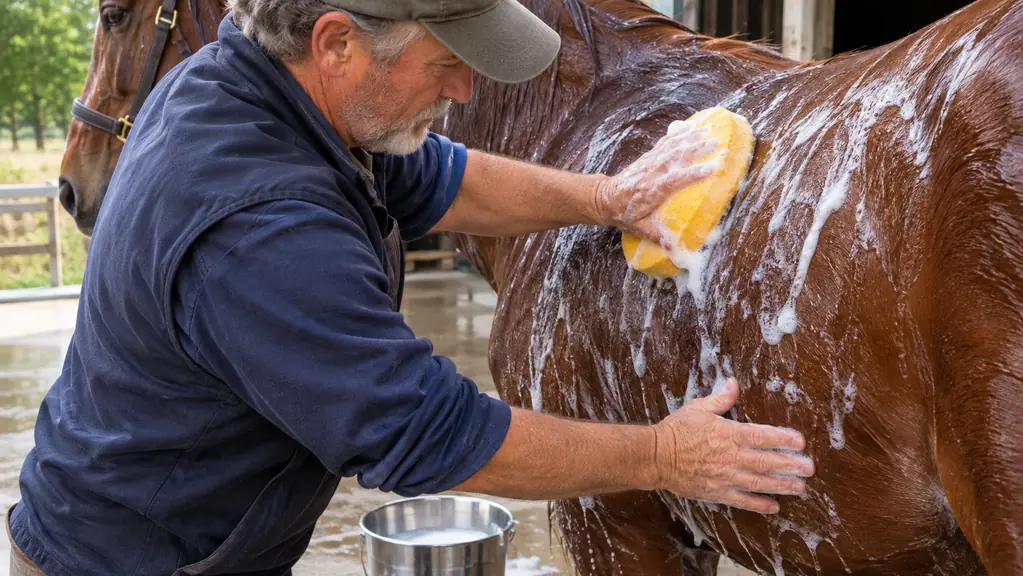
The gel form matters here. It stays roughly where you put it instead of running straight down the shoulder and onto your boots. I squeeze a small amount onto a wet hand or a wash mitt and work it into one stain at a time, starting with the worst area on the horse, which on Sahir is always the elbow and the flank behind it.
My order goes elbows, flanks, hind pasterns, underside of the neck, then the rest of the body. Doing the stains first gives them the longest contact time, and the body does not need much. Cowboy Magic Yellowout is a whitening formula for all coat colors, so I use it on Nadia's bay coat when she grinds something into her shoulder, though she mostly needs a plain rinse and a soft sponge.
Keep it out of the eyes, ears and muzzle. I do the face last, with a damp sponge, and I am stingy about it. A horse that gets shampoo in his eye remembers, and next time you cannot get near his head without a fight. There is no stain on a gray horse's face worth that.
Two washes with the right shampoo and a long rinse lifted the tea-colored ring off Sahir's barrel that four months of blueing rinses had never touched.
Step 4: Let It Sit, Then Rinse Twice as Long as You Think
Let it sit. Five to ten minutes is plenty, and I keep him in the shade while it works. If shampoo dries on the coat in the desert sun you have created a new problem, and the rinse will not fully clear it. This is the one step where doing nothing is the correct action, so use the time to scrub the bucket and refill it.
Then rinse, and keep rinsing. This is the step that separates a gray that comes out silver from a gray that comes out dull under a film of scum. The listing calls it an easy-rinse formula and it is, but easy to rinse and rinsed enough are two different things. Most people stop when the water running off looks clear. Go another full minute after that.
Pay attention to the armpits, between the hind legs, under the mane and around the tail. That is where leftover shampoo hides, and a day later it shows up as a dull patch on a coat that looked perfect when he came off the wash rack. Run your hand over the rinsed coat and feel for slick spots. Slick means come back with the hose.
I also rinse the mane twice. It is the thickest hair on the horse and the easiest place to leave residue behind, and a mane that still has product in it will grab dust on the walk back to the barn and undo half the morning.
Step 5: Dry Him Correctly and Manage the Coat Between Washes
Sweat scrape, then towel, then walk him out. In summer I skip the cooler during the heat of the day and walk him dry in the shade instead. He dries fast in this air. Do not turn him out wet into a dry lot, because he will roll within ninety seconds and you will be right back where you started, only now with a gray horse wearing a fresh coat of dust.
Between baths, the coat needs maintenance or you will be washing him every week. I rinse the sweat off after every ride, curry him before and after, and keep his blankets and saddle pads clean. A dirty pad on a damp back is a stain factory, and it is the reason some grays go yellow in the same two spots all summer no matter what you wash them with.
Kasim, my retired 22-year-old chestnut, gets a much lighter version of all this. He does not sweat the way the riding horses do and he does not love the wash rack, so he gets spot cleaning and an occasional full bath. Nadia has thin skin and objects to water above a certain temperature, so hers is a cool rinse and a soft sponge. The gray in regular work is the one who needs the full routine.
What Else Helps
Turnout matters as much as shampoo. The irrigated pasture is where Sahir picks up most of his green and yellow, so during monsoon season I keep him on the dry lot more and limit his grass time. That is not a stain problem, it is a management problem that turns into a stain problem, and it is cheaper to fix at the gate than at the wash rack.
Clean water, shade, and a daily curry do more for a gray coat than any bottle. Dirt and dried sweat left on the hair abrade it and give stains something to grip. Ten minutes with a curry comb beats an hour with a hose, and the horse enjoys it more.
I also keep two buckets and a dedicated wash mitt. Mud from the hind legs has no business traveling up to a shoulder. Separate sponges for face and body, a hose with decent pressure, and a wash rack that drains so he is not standing in a puddle of dirty water while you try to get him clean.
And I do not over-bath. In summer I might wash Sahir every three weeks or so around shows, with spot cleaning in between. More than that and the coat goes dry and flat, and a dry coat holds dirt worse than a healthy one. That is the opposite of what most people expect when they start scrubbing harder.
If you show, wash two days out rather than the night before. It gives the coat a day to settle and let the natural oils come back, and it means you are not up at five in the morning with a hose when the class is at nine.
Where Yellowout Will Not Save You
It will not undo years. A gray that has been yellow for a decade has hair that has actually changed, and no shampoo changes it back. It will not fix sun bleach, and it will not stop a horse from re-staining himself the day after you wash him. If a stain has been sitting under a dirty blanket since March, expect two washes, not one.
It is also a shampoo, not a conditioner or a coat polish. It will not turn a thin coat thick and it does not replace good hay, clean water and shade. What it does is lift the yellow that comes from sweat, grass, dust and manure, which on a gray in regular work is nearly all of the yellow you are actually looking at. That is a narrow job and it does it well, which is more than I can say for most of what I have tried on a gray horse.
The Bottle That Stays on My Wash Rack All Summer
Cowboy Magic Shine In Yellowout, 32 ounces, whitening gel shampoo with aloe vera and chamomile. It lifts the yellow that sweat, grass and desert dust leave behind on a gray coat, and it rinses clean when you give it the time.
Amazon Check Today's Price on Amazon →