
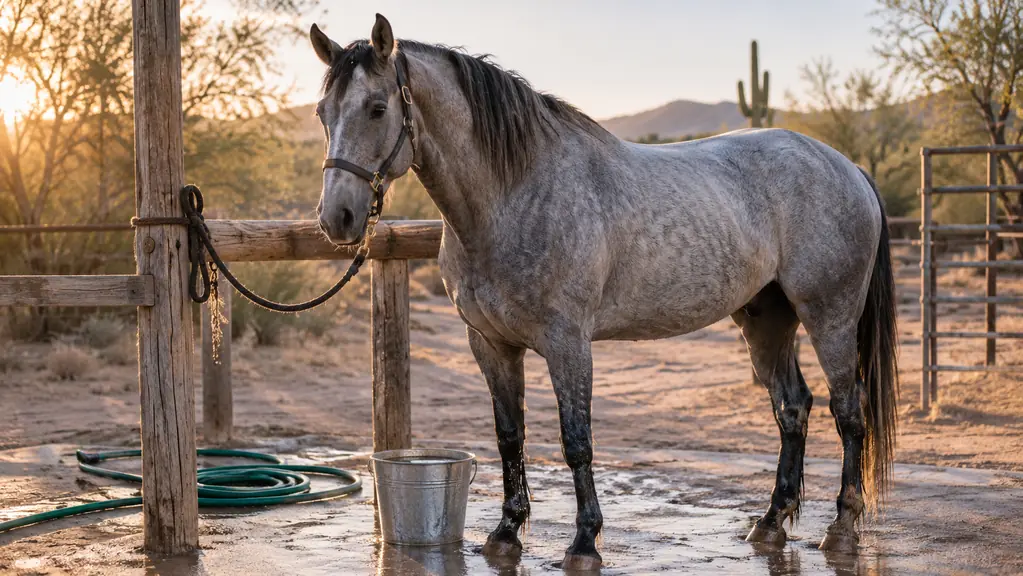
Sahir is a 14-year-old gray Arabian gelding, which means he is not really gray at all. He is a white horse with a gift for finding every yellow thing in Maricopa County. Pasture grass, dry-lot dust, the fine clay that comes up when the monsoon blows through in late summer, all of it lands on his barrel and hindquarters and sets there overnight. I have washed that horse with more shampoos than I can count, and two of them have stayed in the wash rack bucket for years: Cowboy Magic Shine In Yellowout and Vetrolin White N Brite. They are not the same tool, and which one you want depends on what your Arabian's coat actually does.
If your Arabian is gray, white, or carries white markings that go yellow, start with Cowboy Magic. It is aimed squarely at the yellow tone, it rinses out fast, and it leaves the hair soft enough to brush out without an argument. Vetrolin White N Brite is the heavier cleaner. It lifts the set-in manure, clay and stall stains that Yellowout will not chase, and I keep a bottle for exactly that. If I could keep only one on the shelf, it would be the Cowboy Magic. On show week, I use both, in a specific order.
| Cowboy Magic Yellowout | Vetrolin White N Brite | |
|---|---|---|
| Yellow tone on gray and white coats | Built to push a warm yellow cast back toward neutral | Brightens the coat but corrects tone less aggressively |
| Set-in manure and clay stains | Fades them, does not fully lift them | Removes them, including stained tails and white legs |
| Rinse time | Easy-rinse formula, comes out without residue | Usually takes a second rinse to stop feeling slick |
| Finish after dry-down | Aloe vera and chamomile leave hair soft and brushable | Can leave hair dry and wants a conditioner after |
| Lather in hard water | Modest suds, works fine mixed in a bucket | Suds up hard and fast |
| Scent | Mild aloe vera | Stronger and more perfumed |
| Best job | Regular washing on coats that go yellow between baths | One heavy wash before a show or after a dirty winter |
How I Tested Both on Three Arabians
This is not a lab test. It is a wash rack with a hose, a bucket, and three horses that live outside. We are on well water out here, hard and mineral heavy, which changes how any shampoo behaves. I washed Sahir on one morning with both products, one down each side of him, and rinsed with the same hose at the same pressure so I could feel the difference under my own hands. I ran the same comparison on Nadia, my 9-year-old bay mare, who has thin skin and a low tolerance for anything that lathers long or rinses slow. Kasim, the 22-year-old chestnut, gets the harsher treatment because he is retired, unclipped, and rolls in the dirt the minute he goes back out.
What I watched for: how fast the yellow left the coat, how easily the suds rinsed, how the hair felt once it dried, and what the coat looked like the next afternoon. That last one matters most. A shampoo can look impressive on a wet horse in the shade and leave you with something dull and chalky by the following day. I also paid attention to how much water each one took to rinse clean, because in July that is not a small consideration around here.
I mixed each one in a quart of water straight from the hose before it touched him, worked it in with a rubber curry for about two minutes a side, and timed the rinse with the clock on my phone, which sounds far more scientific than the morning actually was. Sahir stood on the wash rack with a hay net in front of him and never moved a foot, so the comparison was as fair as I know how to make it. Nadia was less cooperative. She dances at the hose. I got what I got.
Where Cowboy Magic Yellowout Wins
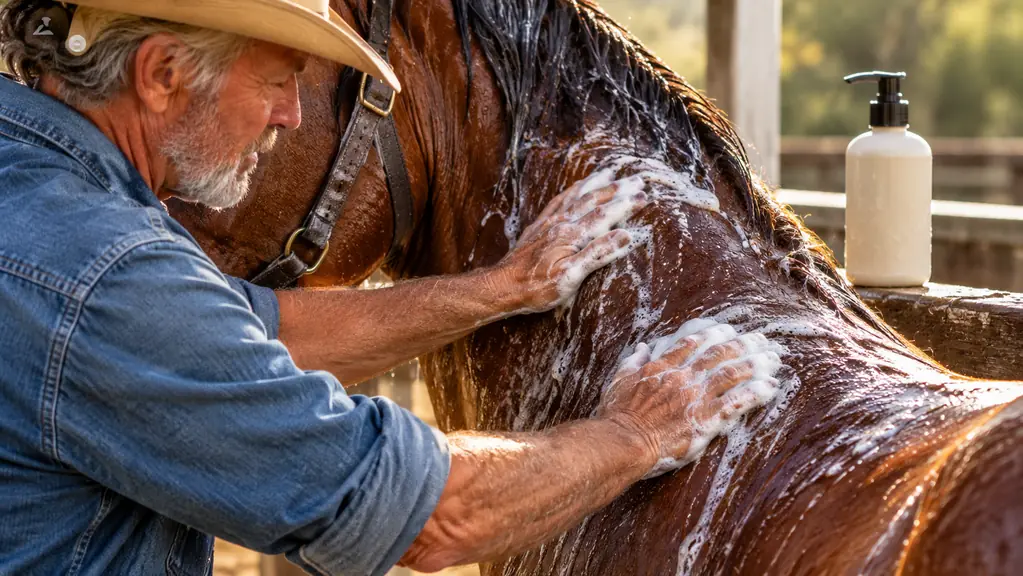
The yellow tone is the entire point of the product, and it does that job better than anything else I have used on a gray. On Sahir's barrel, neck and shoulders, one wash took the dingy cast out and left the coat looking like white hair instead of old ivory. The listing describes it as a whitening gel shampoo that helps neutralize yellow tones, and that matches what I see at the wash rack. It also lists brightening for coats of all colors, which is not marketing noise to me. I have used it on Nadia's bay hindquarters to pull dust out, and it did not leave anything chalky or dry behind on her.
The first time it really registered was a Tuesday in late April, after five days of wind had laid a brown film across his back. I had tried a plain oatmeal shampoo the day before and all it did was make him smell like breakfast. The Cowboy Magic wash took the film off in one pass, and he dried to a white I had not seen on him since January. I have repeated that result enough times now that I have stopped being surprised by it, which is its own kind of recommendation.
The second thing it wins on is rinse time and finish. The bottle calls it an easy-rinse grooming formula without sticky residue, and I believe it because I am the one standing there holding the hose. My water is hard enough that some shampoos never quite come out, and I am left with a horse that feels tacky under a saddle pad two days later. This one comes clean in about half the passes. The aloe vera and chamomile leave the hair smooth enough that my body brush moves through it without snagging, and the scent is mild and clean rather than perfumed. It is a liquid in a 32 fluid ounce bottle, and a small amount in a bucket goes a long way.
Where Vetrolin White N Brite Wins
Set-in stains. That is the honest answer and I will not pretend otherwise. When Sahir has been standing in wet clay along the fence line, or when Kasim has laid down somewhere he should not have overnight, Yellowout will fade the mark and the other bottle will remove it. The difference is most obvious on white legs and on a tail that has been dragged through everything for a month. If a horse is coming out of a dirty winter and I have one wash to fix him before a show, that is the bottle I pick up, and I do not feel bad about it.
Kasim gave me a clean example last February. He got into the low corner of the irrigated pasture and came out caked to the knee on all four legs, the kind of clay that dries like plaster and has to be soaked before it will move. I washed him at about forty degrees with a hose I did not enjoy holding. The heavier shampoo took it off in two passes where the gentler one would have wanted a third and a lot of patience, and his white socks came back looking like socks. That is the whole case for keeping the bottle on the shelf.
It also lathers more aggressively in my hard water, which some people read as a point in its favor. It suds up fast and stays sudsy, so it feels like it is working harder. My experience is that this cuts both ways. I usually end up rinsing twice to get the slick feeling out of the hair, and on Nadia's thin-skinned back I have seen it leave her dry and itchy if I do not follow with a conditioner or a vinegar rinse. It takes more water and more time, and in the middle of a desert afternoon that cost is real.
The bottle that gets the yellow out of a gray coat in one wash
Cowboy Magic Shine In Yellowout is the one I reach for on Sahir nine times out of ten: mild on the hair, fast to rinse, and built for coats that go warm-toned between baths.
Amazon Check Today's Price on Amazon →On Sahir's barrel the yellow lifted in a single wash. On his hind legs, where the clay sets in, I still reached for the second bottle.
What Whitening Actually Does to a Gray Coat
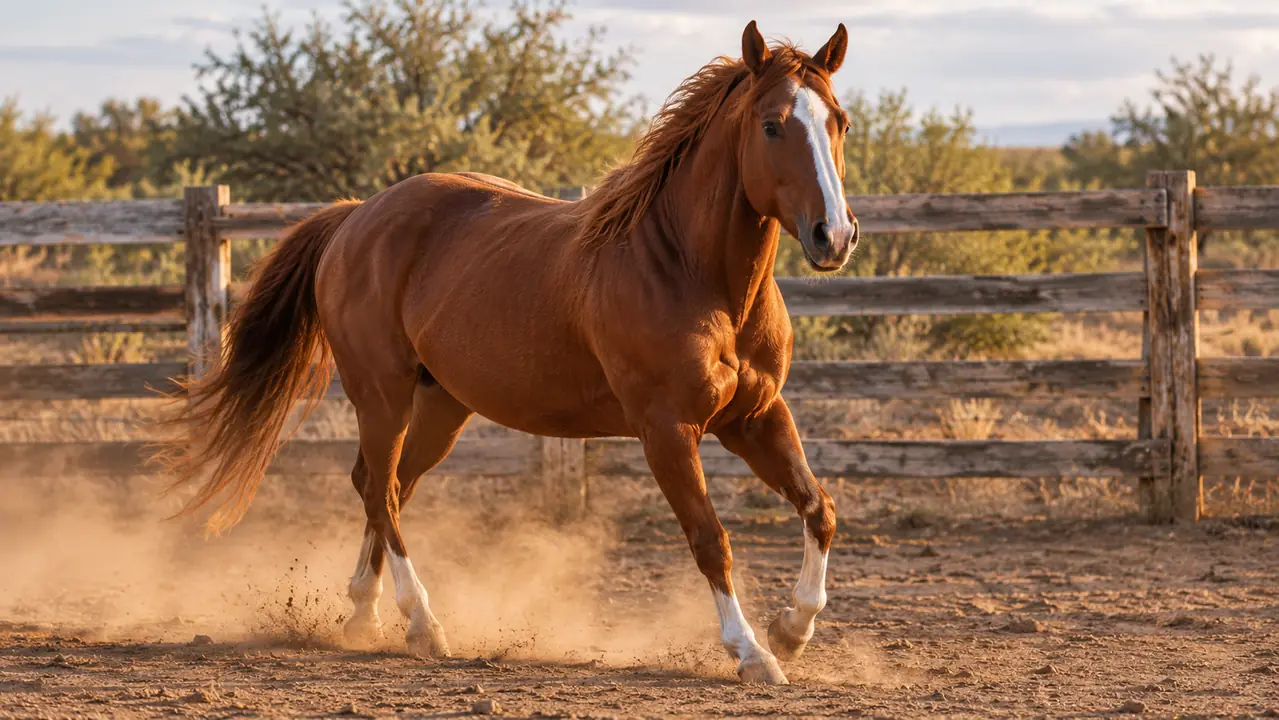
A gray Arabian is not gray the way a blue roan is gray. Most of them are born dark and fade toward white over years, and the hair that results is white with a habit of picking up whatever tone the environment hands it. Yellow is the common one. Sun, sweat, dust and the oils in the coat all push white hair warm, and once it is warm it reads as dirty even when it is technically clean. A whitening shampoo is doing two jobs at once: it cleans, and it pushes that warm tone back toward neutral. If you want the longer explanation, I went through it in my notes on why a whitening shampoo works on gray Arabians.
That is why these two products behave differently even though both are sold as whitening shampoos. One is built to correct tone on hair that is already reasonably clean. The other is built to strip off the material that caused the stain in the first place. Knowing which problem you have saves a lot of wasted effort and a lot of water. If your horse is genuinely dirty, clean him first and correct the tone second. If he is clean and still looks yellow, you have the other problem, and no amount of scrubbing will fix it.
How I Sequence Them on Show Morning
When Sahir is going to a regional open show, I do not choose between these two, I use them in order. Two days out, he gets the heavier wash on his legs, tail and anywhere the clay has packed in, because that is a dirt problem and I want it gone early enough that any dryness has time to settle with a conditioner. The morning before the class he gets the Cowboy Magic wash over his whole body. By then he is already clean, so the shampoo only has to do the tone work, and I am not scrubbing at stains with a horse that is already tired of standing tied.
That order matters more than people expect. If I reverse it, I am asking the gentler product to do a heavy cleaning job, which means more scrubbing, more lather worked into the skin, and a horse that ends up sour before I ever get to his head. Doing it in the right order means the second wash takes ten minutes, rinses fast, and leaves the coat smooth enough that I can body brush him out and put him away. If you want the full walkthrough of the wash itself, I wrote up the wash that finally got the yellow out, step by step.
One more note on timing. I do the heavy wash on a warm afternoon, never the evening before, so he has hours to dry all the way through before he is blanketed or stalled. A horse that goes in damp in February will grow a skin problem faster than any shampoo can fix one. The tone wash goes on the next morning and he is back out by nine. If I am short on time I skip the tone wash entirely rather than rush it, because a half-rinsed shampoo is worse than no shampoo at all.
Who Should Buy Which
Buy Cowboy Magic if you own a gray, a white, a palomino, or a horse with white socks and a blaze, and your complaint is that the white never quite looks white even after a bath. Buy it if you wash often, because the fast rinse and mild finish mean you can do it twice a week in fly season without stripping the coat down. Buy it if you have hard water or a limited supply, since it takes less water to get out. And buy it for a thin-skinned mare like Nadia, where a long heavy lather is a losing argument from the start.
Buy Vetrolin White N Brite if your problem is actual dirt rather than tone. If your horse lives out, rolls daily, and arrives at the wash rack with clay packed into his hind legs and a stained tail, you want the heavier cleaner on that job. It is also the one I keep for a horse coming out of a long, dirty winter. Plenty of people will end up owning both, and that is not wasted shelf space. Use the strong one when the horse is dirty and the gentle one when he is clean but dull, and you will get more out of each bottle than either product delivers alone.
For the horse that goes yellow between baths, not the one that comes in filthy
Cowboy Magic Shine In Yellowout, 32 fluid ounces, aloe vera scented, easy to rinse on hard water. Nadia's thin skin tolerates it and Sahir's gray coat comes out white instead of ivory.
Amazon See It on Amazon →