
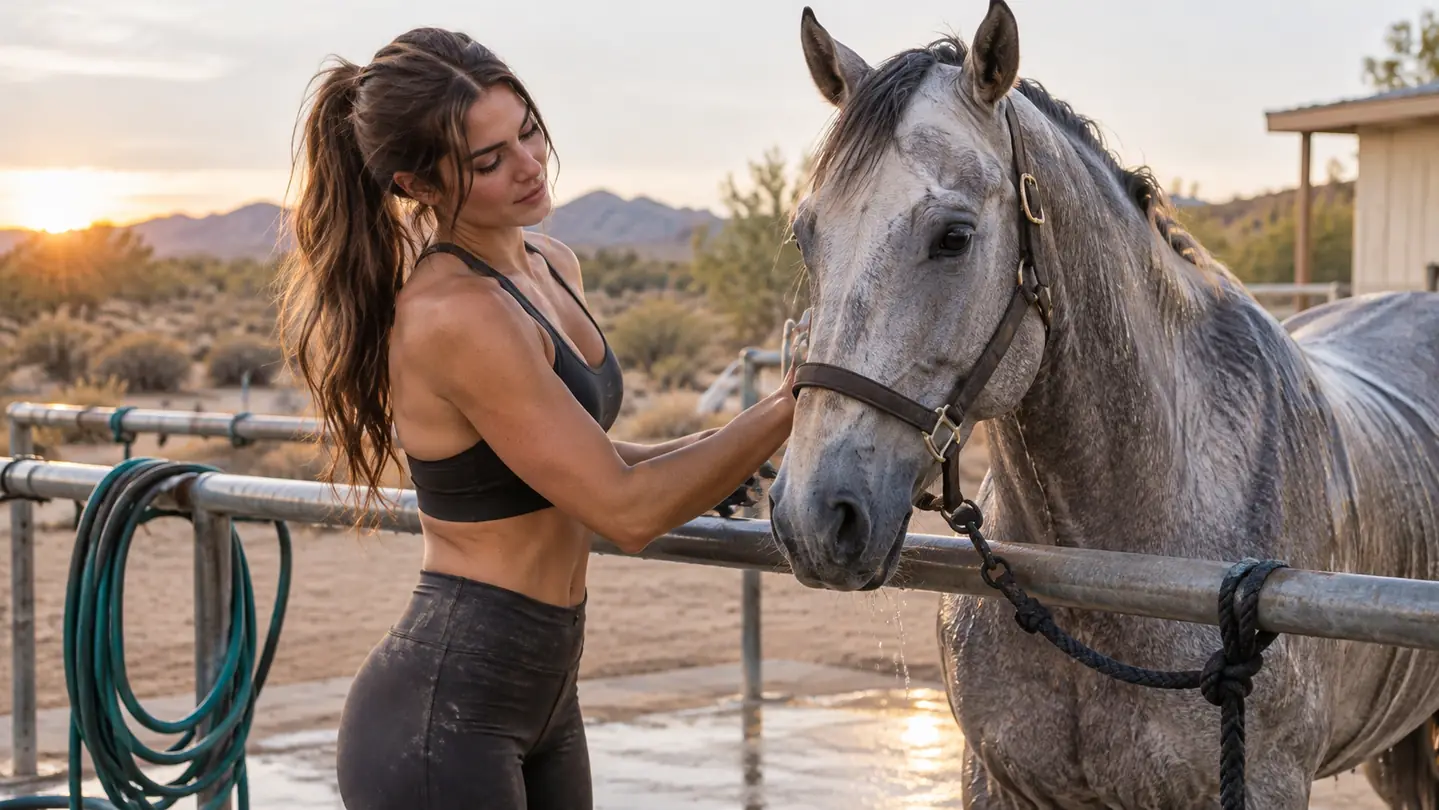
Most whitening shampoos are selling hope. You lather up a gray horse on Saturday, he comes out silver in the sun, and by Wednesday the same tea-colored patches are back along his flank. I have worked through a shelf of those bottles in more than twenty-five years of keeping Arabians, and I expected Cowboy Magic Yellowout to be one more of them. It is not. It is also not the wash-and-forget fix the front of the bottle hints at, and that gap between what the product does and what people assume it does is the whole reason this review exists.
Here is the short version before the long one. This is a genuinely good shampoo for a gray or white horse in regular work. It lifts fresh stains and everyday dullness noticeably, it rinses out clean, and it leaves the hair soft enough to brush through without a wrestling match. It will not turn a sun-bleached coat white again, it takes more water and more patience than a plain wash, and if you skip the rinse you will undo the whole job. If you want a product that erases years of desert sun, keep looking. If you want one that makes a gray horse look honestly clean for a show weekend, this is the one I reach for.
The Quick Verdict
A real whitening shampoo for fresh stains and dull coats. It will not undo sun bleach, and a lazy rinse wastes the whole wash.
Amazon Check Today's Price →The whitening shampoo I actually rebuy for a gray horse
Cowboy Magic Yellowout in the 32 ounce bottle, aloe vera and chamomile formula, made for all coat colors. Check today's price and the current reviews on Amazon before you decide.
Amazon Check Today's Price on Amazon →What Cowboy Magic Yellowout Is Actually Built to Do
The listing makes four claims: it brightens coats of all colors, it helps remove yellow stains, it leaves a soft finish from aloe vera and chamomile, and it rinses easily. Three of those four hold up in my barn. The one that needs a caveat is the yellow stain claim, and that is the one most people are buying the bottle for.
Yellow on a gray horse comes from three different sources, and this shampoo does not treat all three the same. Manure and urine stains on the hind legs and the tail come out with a normal wash and a little patience, and this product speeds that up. Grass and dust stains along the barrel lift with its help, noticeably so. Sun bleach is the third thing, the brassy band across the back and shoulders that shows up every summer here in Arizona, and it is not a stain at all. It is pigment change in the hair shaft from UV exposure. No shampoo on earth reverses that, and any product that implies otherwise is going to leave you disappointed at the wash rack.
Once you separate those three, the product makes sense. It is a stain and dullness shampoo, not a color restorer. On fresh stable stains it works faster than anything else I have used, including the plain dish-soap method a lot of old-timers still swear by. On a coat that has gone flat and dusty from a long dry spell, it brings back a sheen that reads as clean from twenty feet away, which is what a judge actually sees.
The formula is a whitening gel shampoo with aloe vera and chamomile, and it is listed as suitable for all hair colors and not tested on animals. That last part matters to me more than it used to. I have also used it on a bay and a chestnut, and I will get to how that went, because the bottle genuinely does not restrict itself to white horses.
How I Have Used It on My Own Horses
I keep three Arabians on a small place outside Scottsdale. Sahir is my 14-year-old gray gelding and my main riding horse, and he is the reason I own any whitening shampoo at all. He is a stain magnet. Grass along the barrel, dust ground into the hip, manure on the hind legs after a wet night, and a bleached band across the back by the end of June no matter what I do. Nadia is a 9-year-old bay mare with thin, sensitive skin. Kasim is a 22-year-old chestnut gelding, retired, and mostly needs to look respectable for the farrier and the vet rather than for a judge.
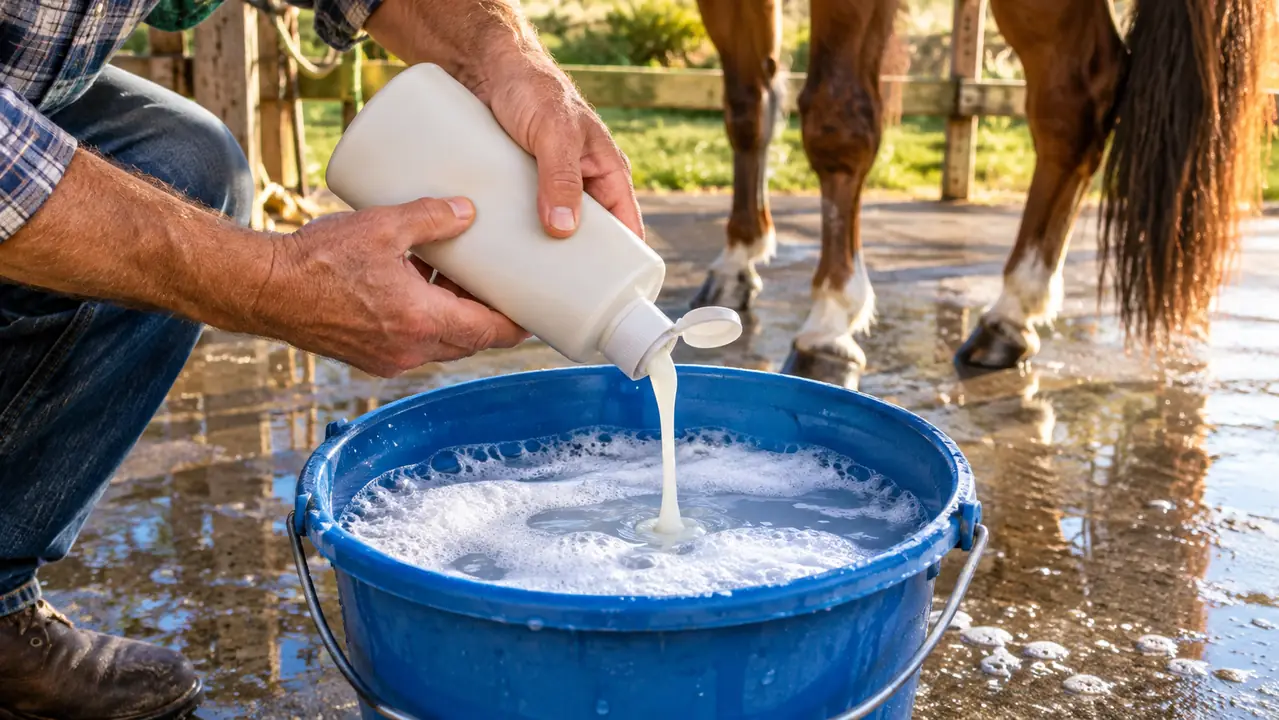
My method is nothing fancy. I wash at the rack with a bucket of warm water, a sponge and a hose, and I mix the shampoo into the bucket rather than squirting it straight onto the horse. I wet the coat down first, work the shampoo in with the sponge in small circles, and let it sit for a few minutes on the stained areas while I do the tail. Then I rinse, and then I rinse again. That second rinse is not optional and I will explain why in a moment.
Across one spring and into the summer, I washed Sahir roughly every ten days and used the same bottle on Nadia twice and on Kasim once a month. The results were consistent enough that I stopped being surprised by them. Fresh manure stains on Sahir's hind legs came out in a single wash, which they had not with the plain shampoo I had been using. The grass stain along his barrel faded over two washes. The bleached band across his back did not change at all, and I never expected it to.
Nadia's bay coat came up glossier than usual, and she did not react to it, which is saying something given how she behaves with harsh soaps. Kasim's chestnut picked up a depth of color that made him look less like a retired horse and more like a horse somebody still cares about. That is a small thing. It is also the kind of small thing that decides whether a bottle stays in the tack room or gets pushed to the back of the shelf.
What I Liked
- Lifts fresh manure and grass stains on a gray coat in a single wash
- Rinses out fast with no sticky film left behind
- Leaves the hair soft enough to brush out without a fight
- Adds visible shine on bay and chestnut coats, not just white ones
Where It Falls Short
- Does nothing for sun-bleached hair, which is what most gray horse owners are actually trying to fix
- Needs a long, thorough rinse or the coat goes dull within a few days
- Takes more product per wash than a plain shampoo on a full body
- The aloe scent is strong and lingers for about a day
Where It Genuinely Performs
The stain removal is the real strength and it is not subtle. Sahir had a grass stain low on his left barrel that had been there long enough to dry into the coat, the kind that usually takes two or three scrubs and a lot of cursing. One wash with this, worked in with a sponge and left to sit while I did his tail, and it was gone. I stood there looking at the spot like an idiot. That does not happen often enough in grooming to be modest about it.
The shine on darker coats surprised me more than the whitening. The listing says it brightens all colors and I assumed that was marketing filler. On Nadia's bay it pulled up a gloss along the shoulder and haunch that read almost like a coat supplement had been at work. On Kasim it did the same, softer, which suits an older horse. If you show a bay or a chestnut and you want a clean, healthy finish rather than a lightened one, it does that job.
The rinse behavior is worth naming separately because it is where cheap whitening shampoos fail. Some of them leave a residue that grabs dust the moment the horse goes back out, so he looks worse by the next morning than he did before the bath. This one rinses out clean when you give it enough water. The hair dries soft rather than stiff, and it stays brushable, which matters on a horse with a long mane that tangles if you look at it wrong.
Nine days after a wash, the grass stain on Sahir's barrel was still gone. The bleached band across his back looked exactly the same as it did before I started.
The Parts Nobody Tells You
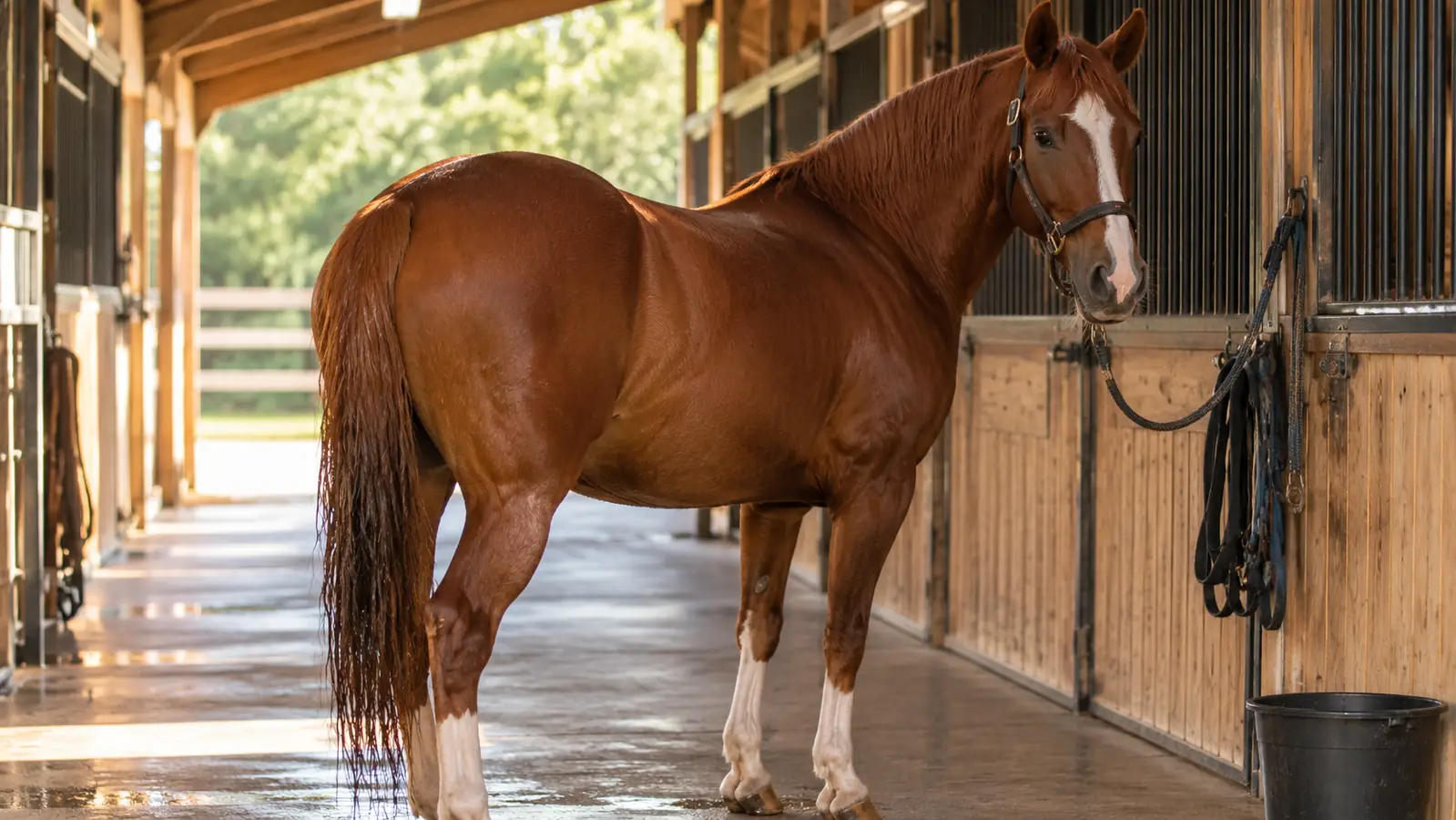
First, the rinse. If you wash this out quickly, the way you would a cheap shampoo, the coat will look flat and slightly tacky within about three days and you will blame the product. I did exactly that on my first wash and spent a week convinced I had wasted my money. The fix is more water and more time than feels reasonable, working the hose down to the skin along the back, the hip and under the tail. When I started rinsing properly, the results changed completely.
Second, it does not touch bleach, and a lot of people buy it hoping it will. Every summer Sahir's back goes brassy and every summer I try something. This shampoo is not the answer to that, and no bottle is. The honest fix is shade, a fly sheet with a UV block during the worst of the day, and accepting that a gray horse in Arizona is going to look a little toasted by August. If a product claims otherwise, it is either lying or it is a color-enhancing wash that leaves a tint behind, which is a different thing entirely.
Third, old set-in stains need a second wash. Fresh manure comes off in one pass. A stain that has been in the coat for a month, particularly in a long winter coat or on the tail, will lighten noticeably and then stop. That is not a failure so much as a limit, and knowing it saves you from scrubbing a horse raw in frustration. I have learned to do one wash, let the coat dry, and come back to the stubborn patches a few days later rather than chasing them in the same session.
Fourth, the scent. It is a strong aloe smell and it hangs around for about a day. I do not mind it. Nadia's board-neighbor owner asked me what I had put on him because she could smell it from the aisle, which tells you how far it carries. If you are sensitive to fragrance, or you are washing the morning of a show and do not want to smell like a spa in the ring, wash the day before instead.
Fifth, and this is the one I would put on the label: spot test a thin-skinned horse. Nadia came through fine, twice, no reaction and no dryness. But her skin reacts to almost everything and I was watching for it. A patch on the shoulder, twenty-four hours, then a full wash. That advice costs you nothing and it has saved me a bad week more than once with a sensitive mare.
Who This Is For
You own a gray, white or light-colored horse that gets dirty in ordinary work and you want him to look genuinely clean rather than just wet. You wash before shows, clinics or the vet, several times a season, and you are willing to spend ten extra minutes on the rinse. You have accepted that sun bleach is a management problem and not a shampoo problem, so you are buying this for stains, dust and dullness. That is the person this bottle is built for, and for that person it is a solid buy.
You also fit if you show a bay, chestnut, roan or palomino and you want a clean shine without lightening the coat. Cowboy Magic Yellowout does that job quietly and well, and there is no reason to reserve it for white horses. I have used it on all three of mine and the darker two got as much out of it as the gray did, just in a different way.
Who Should Skip It
Skip it if the thing bothering you is a bleached, brassy coat. That is a shade and UV problem, and this shampoo will not solve it. You will spend a season washing a horse that looks identical afterward and conclude the product does not work, when the truth is it was never designed for that.
Skip it if you want one quick pass with the hose on a Sunday evening. This formula rewards patience and punishes shortcuts, and a rushed wash is worse than no wash because the residue dulls the coat and grabs dust. Also skip it if your horse has a history of skin reactions and you are not willing to patch test first. There are gentler washes for a horse with a raw or broken-out coat, and this is not the moment for a whitening shampoo.
If your gray horse is stained rather than bleached, this is the bottle
Cowboy Magic Yellowout, 32 fluid ounces, aloe vera and chamomile, safe for all coat colors and not tested on animals. See today's price and what other owners say on Amazon.
Amazon Check Today's Price on Amazon →My honest position after a season with it is that Cowboy Magic Yellowout earns its place in my tack room, but only because I stopped asking it to do the impossible. It cleans a dirty horse better than anything else on my shelf, it leaves the coat soft and brushable, and it holds up on a bay and a chestnut as well as a gray. It does not restore a bleached coat, it does not forgive a short rinse, and it will not save you from the Arizona sun. Buy it for the stains. Manage the sun yourself.